Summer Trail Camera Strategy for Finding a Mature Buck
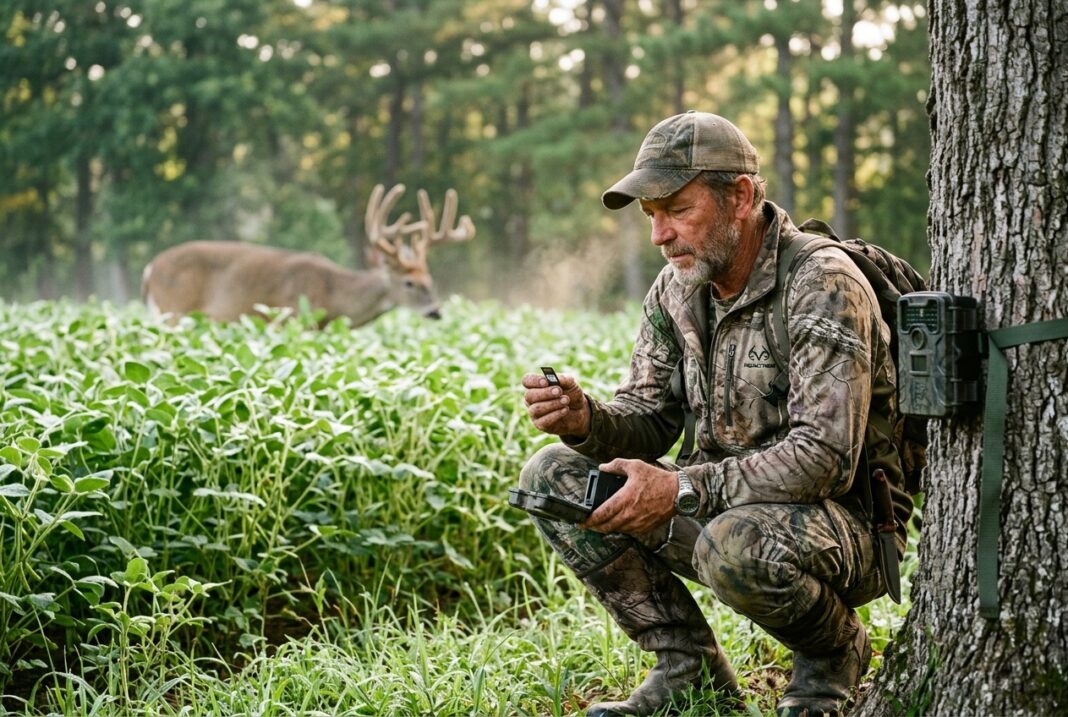
I pulled a card off a mineral site last week and my thumb was slick with sweat before I even got the camera housing open. That’s July in southern Iowa — thick air, deer flies working the back of your neck, and bucks still carrying soft velvet antlers that won’t harden up for another month and a half. A good summer trail camera strategy right now isn’t about getting a hundred photos of the same doe family. It’s about patience and restraint, the same two things that matter every other month of the year.
When should I start running trail cameras for summer scouting?
Mid-June through late July is the window. Bucks are still on predictable summer patterns tied to food and cover, and antler growth is far enough along that you can start telling individuals apart.
This is the easiest time of the whole year to inventory your property because bucks are grouped up in bachelor groups, feeding on the same beans or clover most evenings. I’ve found that cameras set on field edges, not deep in timber, pull the most consistent daylight activity in summer. Once velvet sheds in early September, those same bucks scatter and get harder to pin down, so the work you do now is the foundation for everything that follows.
Where should trail cameras go during summer months?
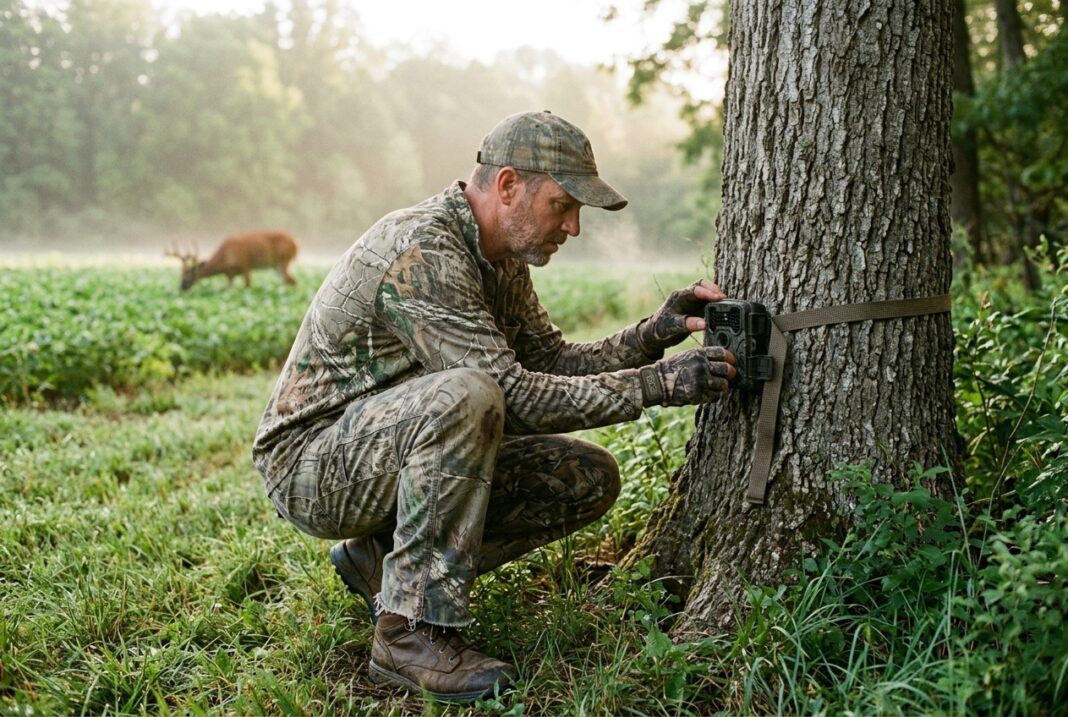
Put cameras on food sources first — soybean fields, clover plots, and any standing corn edges — not on trails deep in the timber. Water sources during dry stretches will also concentrate deer traffic.
I run most of my summer cameras on field edges at 30 to 40 yards, angled north or south to avoid sun glare and false triggers from heat shimmer. A mineral site tucked just inside timber cover near a known bachelor group bedding area will often outperform a camera on a random trail. The National Deer Association has published good research on summer bachelor group behavior that lines up with what I’ve watched in my own fields for three decades.
How often should I check trail cameras without spooking deer?
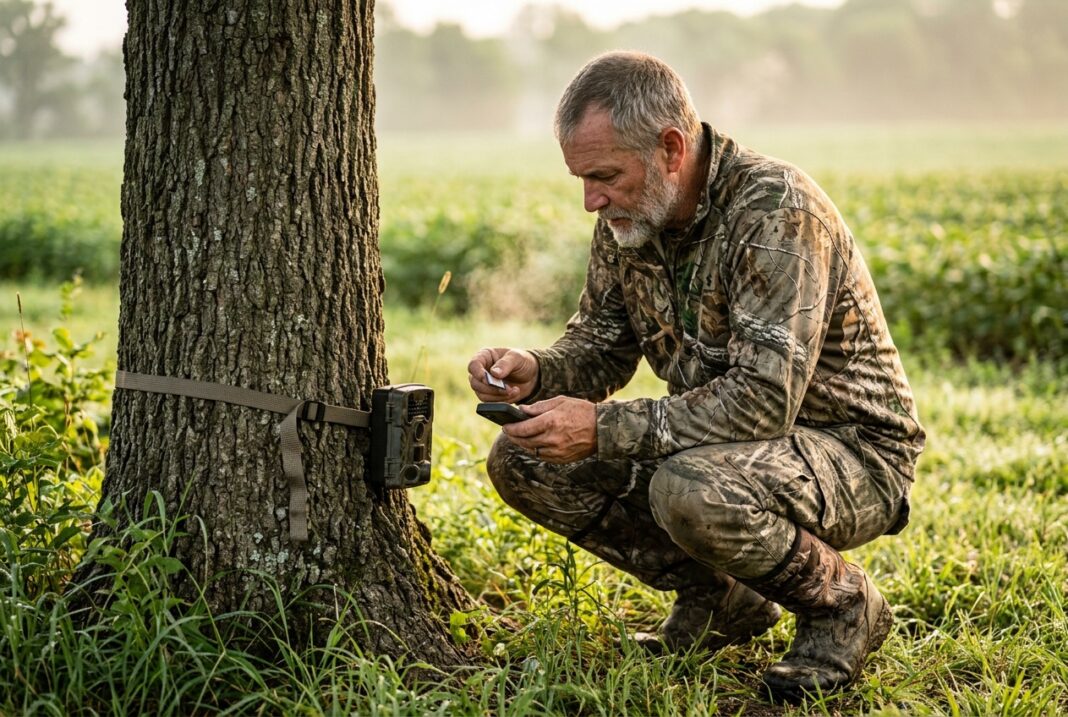
Once every 10 to 14 days is plenty in summer. Deer are more tolerant of human intrusion this time of year than they will be come October, but that tolerance runs out fast if you make it a daily habit.
- Check cameras midday when deer are bedded, not at dawn or dusk when they’re moving to feed
- Park away from the field and walk in on the same worn path each visit
- Use cellular cameras on properties you can’t access without crossing open ground
- Wear rubber boots and skip the four-wheeler when you can walk instead
What should I actually be looking for in summer trail camera photos?
Look for consistency, not just size. A buck that shows up on the same camera at the same rough time three or four times over a month is telling you something about his pattern that a single photo of a giant rack never will.
I’ve learned to trust the deer that show up quietly and often over the one that shows up once looking spectacular and then vanishes. Bachelor groups will break up gradually as velvet starts to peel in late August, and the buck who fed in that same corner of the bean field all July is usually still somewhere close come opening week. The Minnesota DNR deer research pages have solid data on home range size that backs up what most of us already suspect from years of camera work — mature bucks in good habitat don’t travel nearly as far as hunters assume.
Final Word
- Run cameras on food sources and water, not deep timber trails, through July
- Check cards every 10 to 14 days, midday, on foot
- Track the same buck across multiple sightings before you get excited about one photo
- Remember that summer patterns are a starting point, not a guarantee for October
Go pull your cards this week if you haven’t already, and instead of scrolling for the biggest rack, build a simple list of which bucks are showing up more than once. That list is worth more to you in September than any single trophy photo you’ll get this month.