Trail Camera Setup for Summer Whitetail Scouting
I pulled an SD card off a camera two weeks ago and found nothing but four hundred pictures of soybean leaves moving in the wind. Wasted trip, wasted battery, and a card full of nothing. That kind of frustration is exactly why trail camera setup for summer scouting matters more than people think — most guys hang a camera and hope, instead of setting it up to actually work.
Where should I place trail cameras in July?
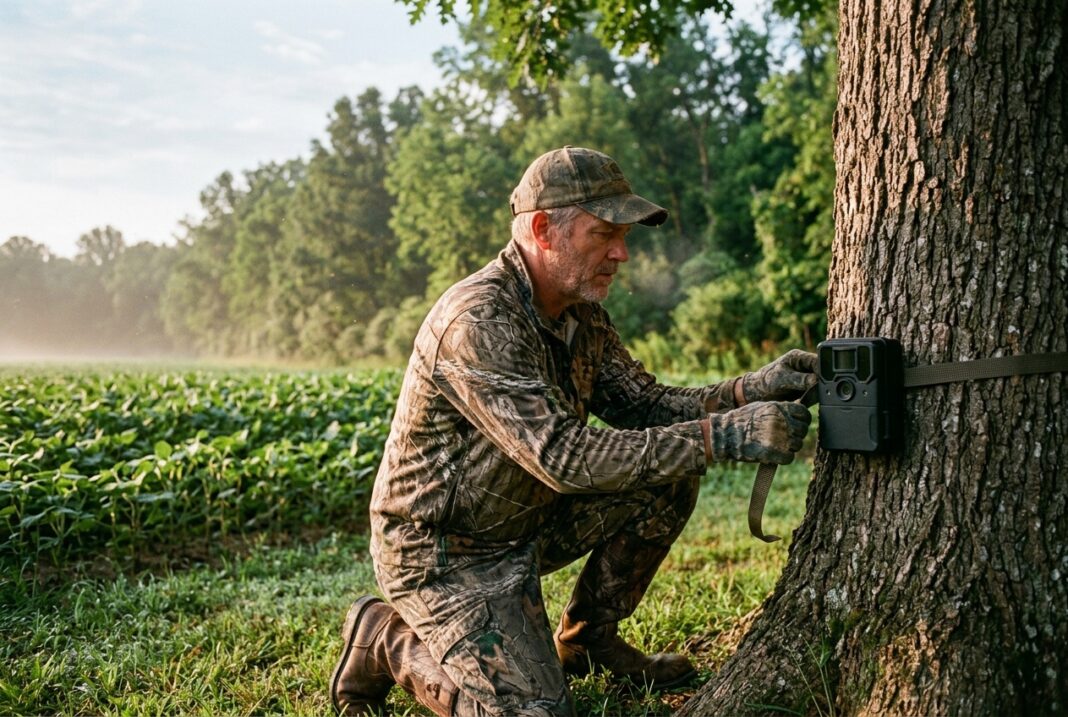
Right now, in mid-July, cameras belong on food — soybean fields, clover plots, alfalfa, and any standing water source if you’re in a dry stretch. Bucks are still in bachelor groups and predictable, which makes this the easiest window all year to pattern them.
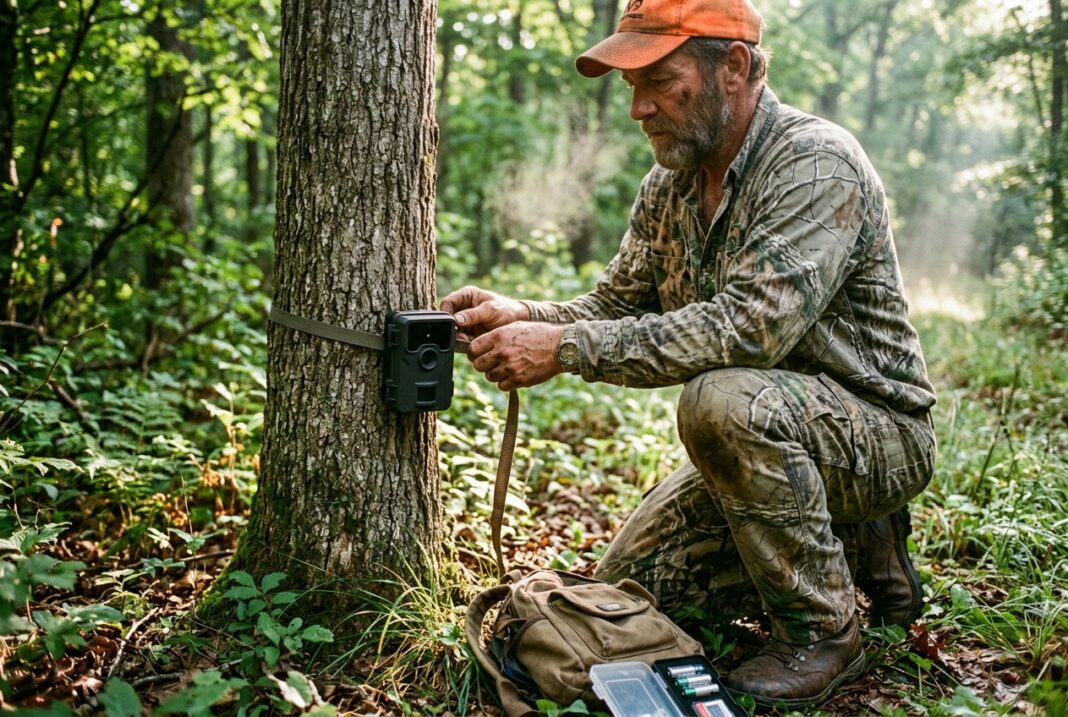
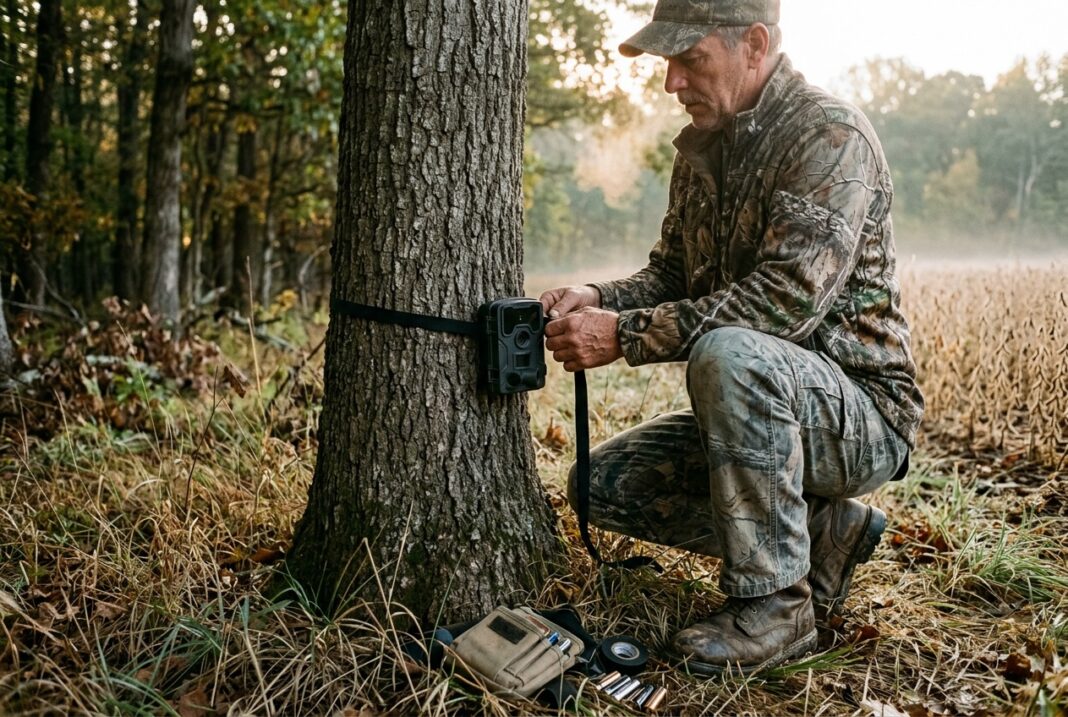
I run mine on field edges about fifteen yards off the tree line, angled north or south so the sun doesn’t wash out the lens at sunrise or sunset. Facing a camera east or west sounds like a small detail until you’ve got two months of pictures that are just white glare and a blurry rump. I made that mistake my second year running cameras and it cost me a whole summer of usable data.
Cellular or SD card — which is actually worth the money?
Cellular cameras are worth it on property you can’t check often; SD card cameras are worth it on ground you visit regularly without spooking deer. I run both, and neither one is a clear winner across the board.
My cellular units run me about thirty bucks a month in data across a four-camera plan, and honestly, on land I hunt twenty minutes from my house, that’s money I didn’t need to spend. SD cards do the same job for free if you’re willing to walk in and pull them — the tradeoff is human scent and disturbance, which matters more in October than it does right now in July. For a good breakdown on how scouting pressure affects deer movement, the National Deer Association has solid research on minimizing intrusion during pattern-building months.
What trail camera features actually matter?
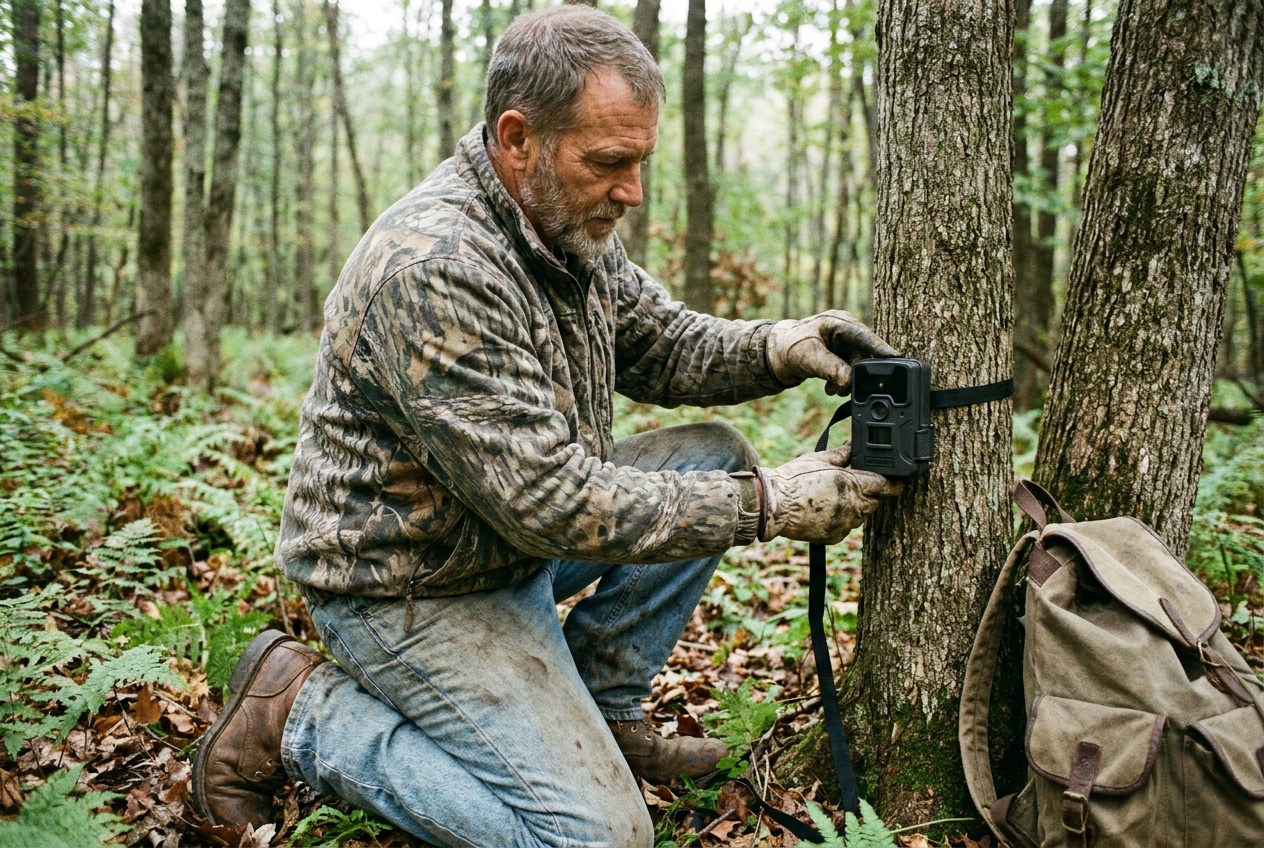
Detection speed and battery life matter far more than megapixel count or night-vision range. A camera that takes a second and a half to trigger will miss a cruising buck nine times out of ten, no matter how sharp the photo would’ve been.
- Look for trigger speed under half a second — anything slower misses deer walking normal speed through timber
- Run lithium batteries in summer heat; alkaline batteries lose maybe a third of their life in consistent ninety-degree weather
- Skip the 32-megapixel marketing claims — 20 megapixels is plenty, and higher counts just slow down transfer and drain batteries faster
- Buy a camera with a metal security box if it’s going on public ground or a lease with foot traffic; I’ve lost two cameras to theft over the years and both were unprotected
How often should I check cameras in summer?
Every two to three weeks is enough for SD card cameras on food sources right now — daily or weekly checks with cellular units if you’re patterning a specific buck. Bachelor groups don’t move much this time of year, so there’s no rush.
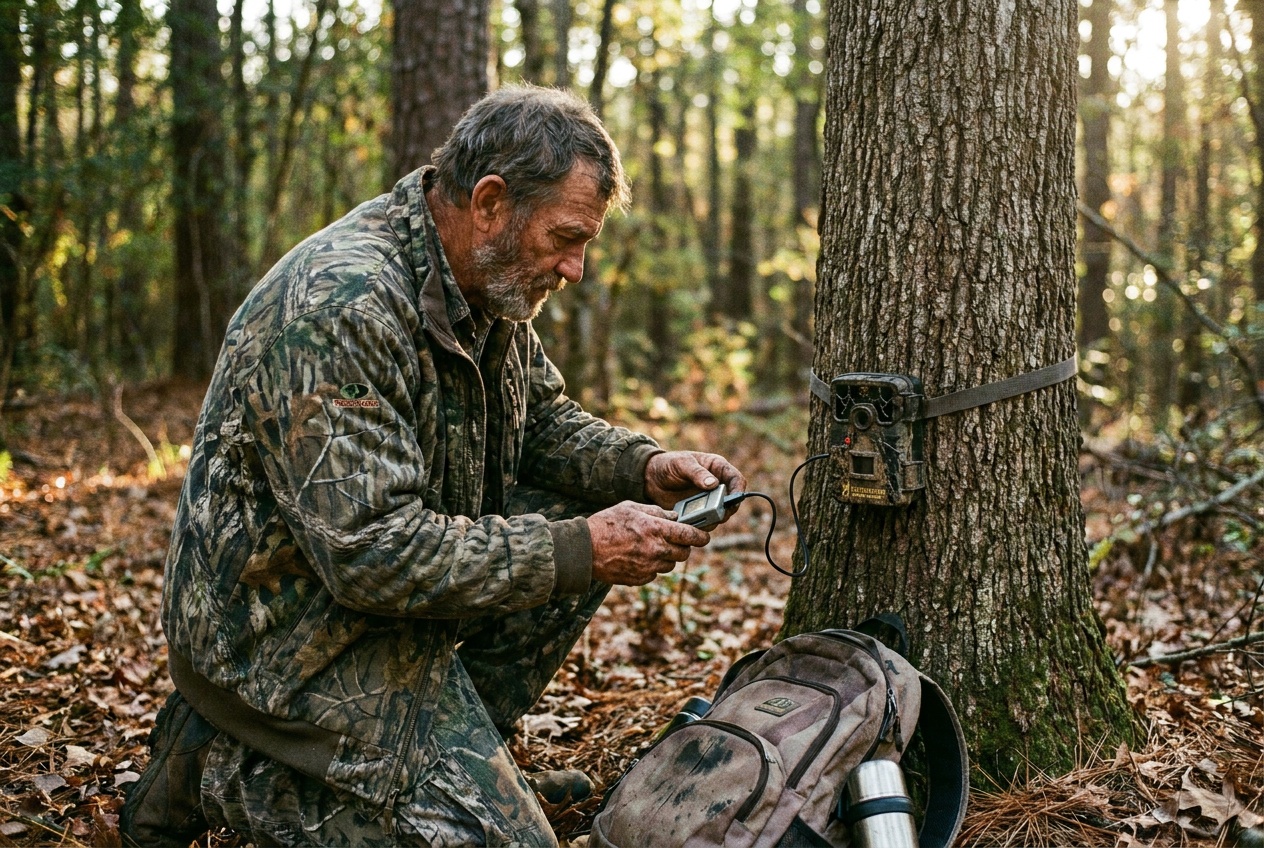
What I don’t recommend is what a lot of guys do in July, which is checking cameras every few days just because they’re excited. That’s excess pressure for zero benefit — the deer aren’t going anywhere yet, and you’re just laying down scent trails for no reason. The Quality Deer Management Association archives have some good older field studies on how camera-check frequency correlates with deer avoidance behavior, and the pattern holds up in my own experience too.
Final Word
- Angle cameras north or south on field edges to avoid sun glare ruining your photos
- Use lithium batteries now — summer heat cuts alkaline life by roughly a third
- Choose cellular only if you can’t physically check ground often; otherwise save the monthly fee
- Limit summer checks to every two to three weeks to avoid pushing bachelor groups off the food source
Most hunters overspend on camo and underspend on the stuff that actually gathers information — cameras, optics, boots. A two-hundred-dollar SD card camera set up correctly will out-perform a five-hundred-dollar unit hung wrong every single time. Go check your batteries today, not in August when the bucks start shifting off summer patterns and you’ve got no data to show for it.