Whitetail Feeding Patterns: Early to Late Season Guide
If you hunt the same stand in November that you hunted in September, you’re leaving deer on the table. Whitetail feeding patterns aren’t static — they shift with the calendar, the weather, and the deer’s own biological clock. A buck that’s hammering clover at last light in early October might not touch that same plot by Thanksgiving. Understanding why that happens, and adjusting before it does, separates hunters who fill tags from hunters who fill excuses.
This isn’t complicated science, but it does require paying attention. Deer are eating machines with one job: survive to breed and survive the winter. Every food choice they make traces back to that priority. Once you start reading their patterns through that lens, the season starts to make a lot more sense.
Let’s walk through how feeding behavior evolves from the first frosty mornings of September through the brutal cold of late December and January, and what that means for where you hang a stand.
Early Season Feeding Patterns: Predictable and Pattern-Driven
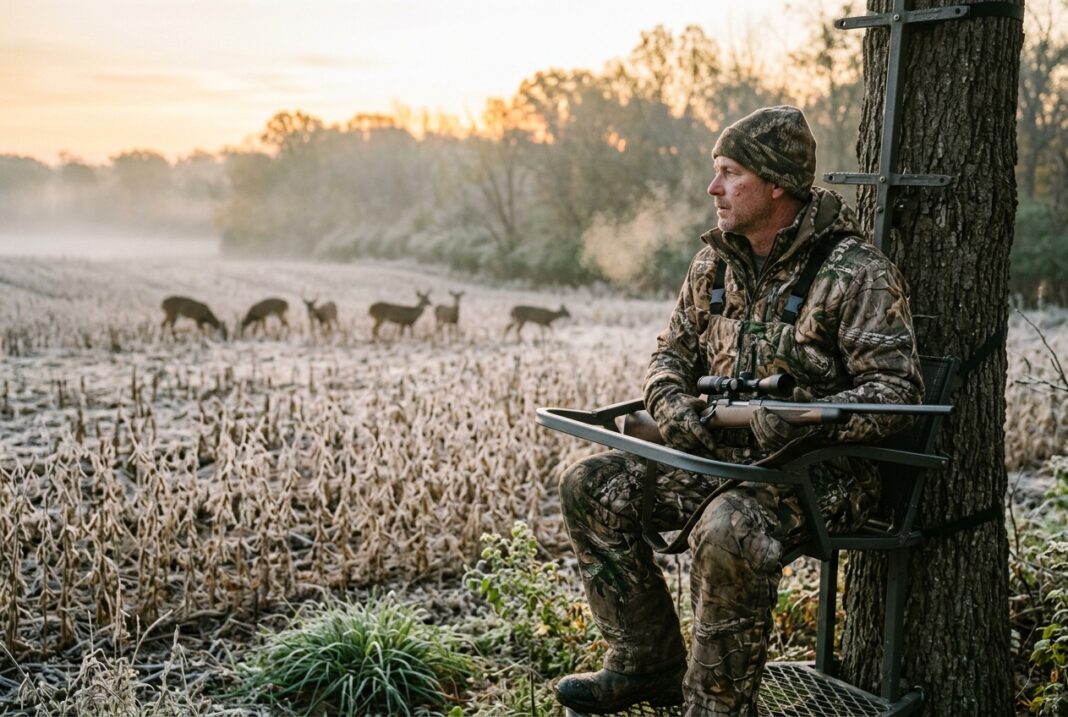
Early season deer are creatures of habit in the truest sense. Bucks are still in bachelor groups, does are running with this year’s fawns, and everyone’s food-motivated because summer growth hasn’t stopped yet. This is the time of year when patterns are the most predictable you’ll see all season — soft mast like apples and pears, agricultural fields still in full green, and food plots planted specifically for early-season attraction.
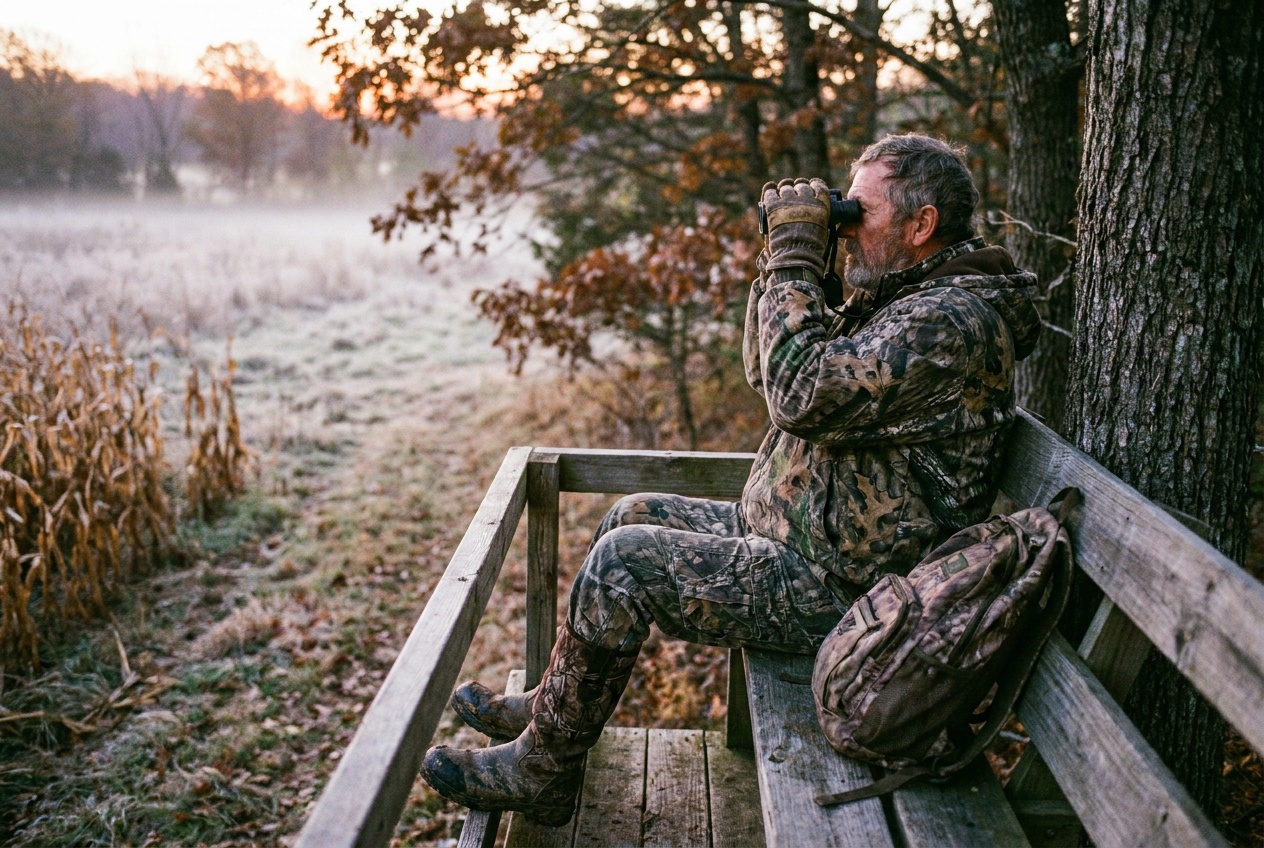
Alfalfa, soybeans in the green stage, and clover plots are magnets right now. Deer are keying in on protein and moisture, not fat reserves, because the pressure to bulk up for winter hasn’t kicked in yet. I’ve had my best early-season luck glassing field edges an hour before dark and simply watching where deer step out first. That single piece of information tells you more than any trail camera survey.
The mistake a lot of hunters make here — and I’ll admit I made it for years — is over-hunting these early food sources. You get a great pattern dialed in during the first two weeks of the season, and it’s tempting to hunt that same stand five times in ten days. Don’t. Mature bucks in particular will bust you on wind or movement faster than you think, and once they’re onto you, that early-season pattern is gone for the rest of the year. Rotate in, hunt it smart, and back off before you burn it.
The October Lull and the Great Food Shift
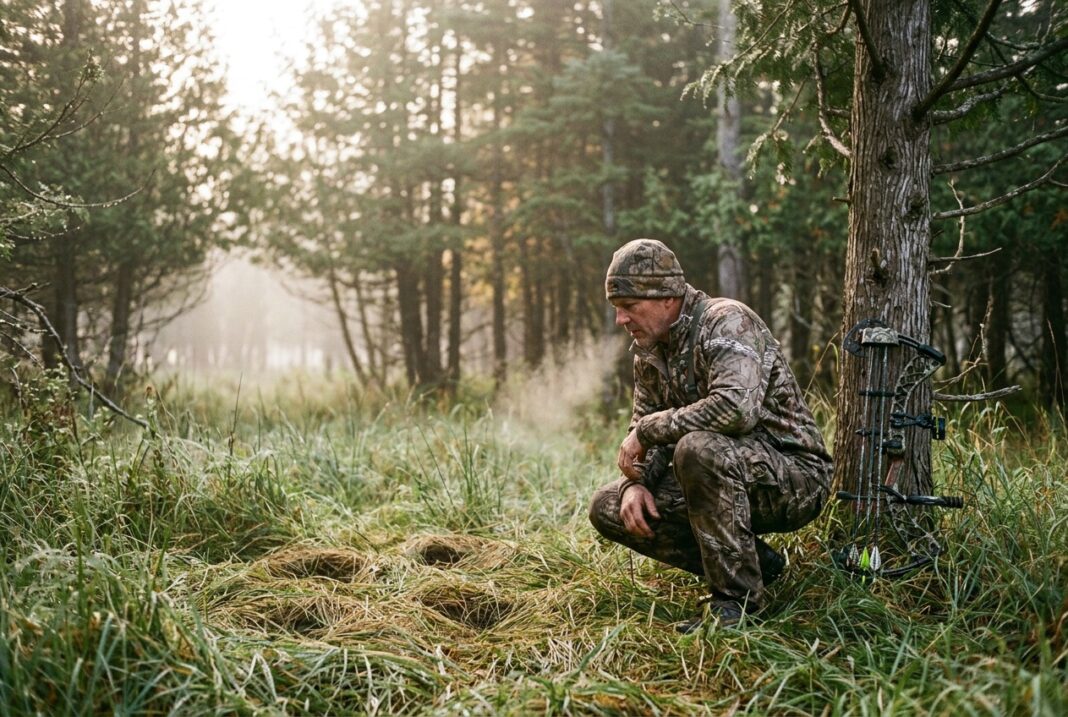
Somewhere between mid-September and mid-October, depending on your latitude, the whole game changes. Hard mast starts dropping. Acorns hit the ground, and when they do, deer will often abandon food plots and ag fields entirely in favor of oaks. This is the period hunters call the “October lull,” and while some of that slowdown is tied to daylight and temperature, a big chunk of it is simply deer relocating to a better calorie source.
White oak acorns are the whitetail equivalent of a five-star restaurant — lower in tannins, sweeter, and preferred over red oak acorns when both are available. If you’ve got a mixed hardwood stand nearby, scout it in late September before the drop even starts. Find the white oaks dropping first, and you’ve found your next stand location before most hunters even realize the pattern has shifted.
The National Deer Association’s research on mast crops backs this up — mast availability directly influences deer distribution and can override even well-established ag field patterns almost overnight. That’s not a subtle shift. That’s deer voting with their feet for the better food source, and if you’re not willing to move with them, you’re hunting empty stands.
Rut Feeding Behavior: Chaos Wearing a Calendar
Once the rut kicks in, feeding patterns for mature bucks essentially fall apart. Testosterone wins over hunger, and bucks will cover miles chasing does instead of hitting a feeding schedule. This frustrates hunters who try to keep hunting food sources through peak rut and wonder why the big deer stopped showing up.
Here’s the thing though — does don’t stop eating. Fawns don’t stop eating. And bucks, even during the rut, still have to refuel eventually. So instead of hunting food sources hoping for a rutting buck, smart hunters shift to hunting travel corridors and doe bedding-to-feeding routes during the rut window, because that’s where the buck activity concentrates as they cruise for does. Food plots adjacent to thick bedding cover become gold mines, not because bucks are there to eat, but because does are there to eat and bucks are there to check them.
I learned this one the hard way. Years ago I sat over a beautiful soybean field for four straight rut sits, convinced the pattern from early October would hold. It didn’t. I saw does, fawns, and one spike. Meanwhile a buddy hunting a pinch point between two bedding areas half a mile away arrowed a mature 10-point on day three. Lesson learned: during the rut, hunt the does and the terrain, not the feed.
Late Season Feeding Patterns: Survival Mode Kicks In
By the time late season rolls around, everything changes again. The rut is over, temperatures have dropped hard, and deer shift into pure survival mode. This is when feeding patterns become predictable again — arguably more predictable than any other point in the season — because deer are now driven by one thing: replacing lost fat reserves before winter really tightens its grip.
Standing corn, soybeans left in the field, and brassica food plots become the hottest real estate in the woods. Brassicas in particular go through a starch-to-sugar conversion after a hard frost, which makes them significantly more palatable and calorie-dense late in the year. Deer that ignored a turnip plot in October will hammer it in December once that conversion happens.
Cold fronts intensify this behavior. A deep freeze following a warm stretch will trigger daylight feeding activity you simply don’t see any other time of year, because deer need calories and they need them now. This is when hunters who’ve scouted the best remaining food source in their area — and who are willing to sit cold, uncomfortable sits — tend to close out their season with a mature buck.
Reading the Regional Food Source Calendar
One thing I’ll say bluntly: there’s no single food-source calendar that works nationwide. A hunter in the Midwest working standing corn and soybeans is dealing with a completely different late-season equation than a hunter in the Southeast working persimmons, honeysuckle, and green browse that never really shuts down. Regional deer densities, ag practices, and even snowfall totals all shift the timeline.
This is where checking your state forestry and wildlife management resources pays off — many state agencies track mast production surveys annually, and a poor acorn year in your area can completely rewrite the early-to-mid season pattern before you ever set a stand. Likewise, most state wildlife agencies, like the Wisconsin DNR’s deer management program, publish regional herd health and habitat data that can tip you off to food scarcity or abundance well before the season opens.
Don’t skip this homework. Reading a national whitetail article (including this one) gives you the framework, but your local mast survey and ag report give you the specifics that actually put deer in front of your stand.
Common Mistakes Hunters Make Chasing Food Patterns
The biggest mistake I see, and one I’ve been guilty of myself, is hunting last month’s pattern instead of this week’s reality. Deer move on. Food sources dry up, get depleted, or simply lose their appeal once something better becomes available. If you’re still hunting a food plot that deer clearly abandoned two weeks ago because “it worked before,” you’re hunting memories, not deer.
The second mistake is ignoring access and pressure in favor of food quality. The best food source in the county does you no good if you have to walk past a bedding area to reach your stand. Deer will pattern you faster than you pattern them. I’d rather hunt a mediocre food source with clean access than a phenomenal one that requires blowing through deer to get there.
Putting It All Together
Whitetail feeding patterns are a moving target, and that’s exactly why they’re worth studying instead of memorizing. Early season rewards patience and observation. The mast drop rewards scouting and flexibility. The rut rewards ignoring food altogether in favor of terrain and doe activity. And late season rewards the hunters willing to brave the cold and sit over whatever calorie-dense food source remains standing.
Master each phase individually, and you’ll stop treating the whitetail season as one long guessing game. You’ll start treating it as four distinct hunts stacked on top of each other — each with its own rules, its own best food sources, and its own opportunities for the hunter paying close enough attention to take advantage.
—