How Does Public Hunting Land Work? A Straight Answer for Whitetail Hunters
Every deer season, thousands of hunters find themselves staring at a state game land map for the first time, wondering why the rules on one tract feel nothing like the rules on the next. That confusion is normal. Public land isn’t one system — it’s a patchwork of federal, state, and local programs, each with its own permit structure, season dates, and unwritten code of conduct. If you’ve ever asked how does public hunting land actually work, you’re not alone, and the answer matters more than most hunters realize before they show up opening morning with the wrong tag in their pocket.
I’ve hunted public ground in four states now, and I’ll say this plainly: the hunters who succeed on public land aren’t the ones with the best gear. They’re the ones who did their homework on access rules before they ever stepped into the timber.
What Counts as “Public Hunting Land”
Public hunting land generally falls into a few categories: national forests, Bureau of Land Management (BLM) tracts, state wildlife management areas (WMAs), state forests, and land enrolled in walk-in access programs through private landowner agreements. Each of these is managed differently, funded differently, and — this is the part that trips people up — regulated differently even within the same state.
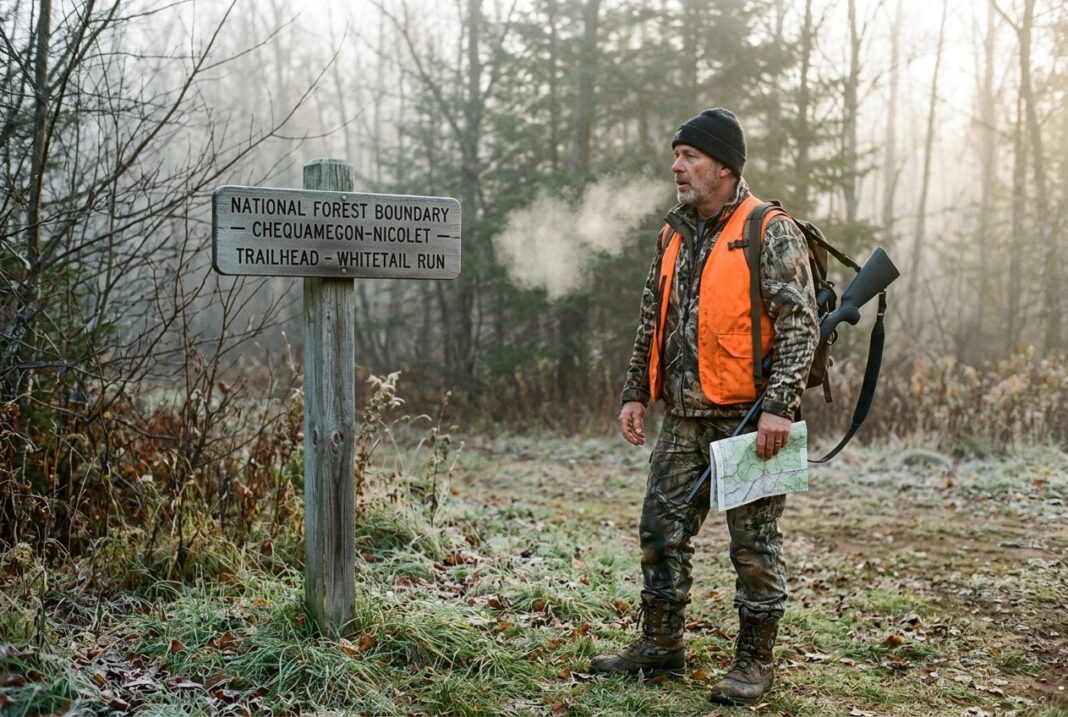
National forest land, managed by the U.S. Forest Service, is typically open to hunting under the state’s general regulations, but you’ll still find local restrictions on vehicle access, camping, and stand placement that don’t exist on state WMAs. BLM land, concentrated mostly in western states, operates under a similar multiple-use mandate — you can find details on hunting access through the BLM’s hunting program page. State-owned WMAs and game lands are usually the most heavily regulated of the bunch because state wildlife agencies actively manage deer populations on that ground and need tighter control over harvest data.
The mistake hunters make is assuming “public” means “uniform.” It doesn’t. A tract labeled national forest thirty minutes from a WMA can have completely different rules for baiting, tree stand attachment, or even Sunday hunting.
Who Actually Manages the Land — and Why It Matters
Public land management in the U.S. splits mainly between federal agencies and state wildlife agencies, and understanding which one controls the ground you’re hunting tells you almost everything about what’s legal there.
Federal land — national forests, BLM tracts, some national wildlife refuges — falls under agencies whose primary mission is broader than hunting. The U.S. Fish and Wildlife Service manages National Wildlife Refuges, and hunting on those tracts is often more restricted, sometimes requiring a special refuge permit on top of your state license. Check refuge-specific rules through the USFWS refuge system pages before you assume standard state season dates apply.
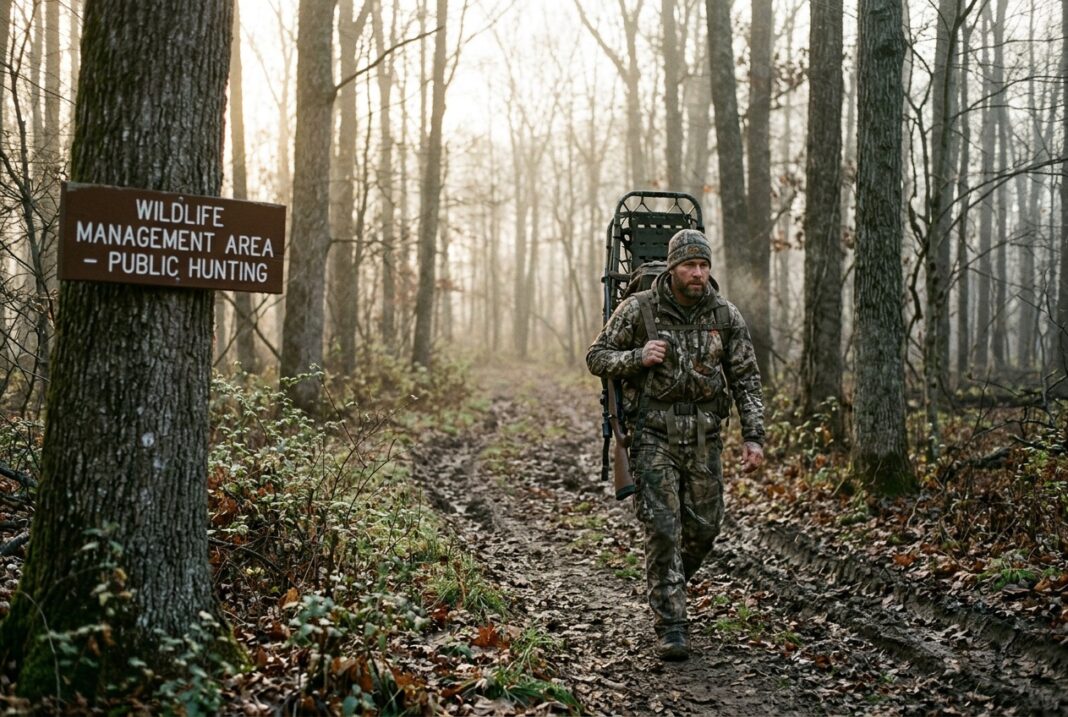
State land, by contrast, is usually managed directly by your state’s Department of Natural Resources or Fish and Game agency, and this is where deer-specific management gets serious. States use WMAs to control herd density, test for chronic wasting disease, and sometimes run special antlerless-only hunts to bring numbers down in overpopulated areas. If you’re hunting a WMA, you’re hunting inside an active management plan — not just empty ground that happens to be open to the public.
Access Isn’t Always Automatic
Here’s something a lot of newer public land hunters don’t expect: not all public land is open all the time. Some tracts have seasonal closures for nesting birds or logging operations. Some require a separate access permit beyond your hunting license, particularly on refuges or land enrolled in walk-in programs. Some states even require an additional WMA stamp or lottery draw for specific parcels, especially ones known for producing mature bucks.
I learned this the hard way. A few seasons back I drove three hours to hunt a state forest tract I’d scouted heavily on aerial imagery, only to find a gate closed for an active timber sale — information that was posted on the state forestry website but not on the hunting regulations page I’d checked. I sat in my truck for a good ten minutes just irritated at myself. That trip taught me to always check two sources before committing to a tract: the wildlife agency’s hunting page and the land management agency’s operational notices. It’s an extra fifteen minutes of research that’s saved me from wasted trips more than once since.
Draws, Quotas, and Why Some Public Land Feels Like a Lottery
Some of the best public whitetail ground in the country operates on a draw system, not open access. High-pressure states, or specific tracts known for trophy potential, often cap the number of hunters allowed per day or per season through a lottery. Miss the application deadline and you’re locked out for the year, no exceptions.
This isn’t a flaw in the system — it’s deliberate. Wildlife agencies use quotas to prevent overcrowding and to keep hunter density low enough that deer behavior doesn’t collapse into pure nocturnal avoidance. The National Deer Association has published extensively on how hunting pressure directly shapes deer movement patterns, and their research backs up what most experienced public land hunters already know from experience: too many hunters on too little ground turns daylight deer activity into a ghost town by week two of the season. You can dig into their pressure and habitat research at the National Deer Association site, and it’s worth doing before you assume more access automatically means more opportunity.
How Whitetail Behavior Changes on Public Ground
This is the part that separates hunters who thrive on public land from the ones who quit after one bad season. Public land deer are not private land deer. They’ve been shot at, bumped off bedding, and pushed through cover by hunters who don’t scout quietly. By mid-October on heavily hunted tracts, mature bucks have often already shifted to nocturnal patterns or relocated to the nastiest, least accessible cover on the property.
I’ll say this bluntly: if you’re hunting the same easy-access spot everyone else parks near, you’re not hunting public land — you’re hunting leftover pressure. The bucks worth chasing are back in the swamp edges, the steep ridges nobody wants to climb, the thick cutovers that require a half-mile walk in waders. Public land rewards physical effort in a way private land rarely does, because effort is the filter that thins out ninety percent of your competition before daylight.
Season Structure Isn’t Always What You Expect
Public land often runs on a different clock than private ground in the same state. Some WMAs open earlier for youth or mentored hunts. Others close entirely during firearms season to reduce user conflict with archery hunters, or vice versa. Antlerless quotas on public tracts frequently differ from the general statewide bag limit, especially where a state agency is actively trying to manage herd density through targeted doe harvest.
Before every season, I pull up my state’s specific WMA regulations booklet — not just the general hunting digest — because I’ve seen the general and WMA-specific rules contradict each other on details like stand placement height, blaze orange requirements during archery season, and legal shooting hours near trailheads. Most state DNR websites publish these WMA-specific supplements separately from the main hunting guide, and skipping that document is asking for a citation you didn’t see coming.
Scouting Public Land the Right Way
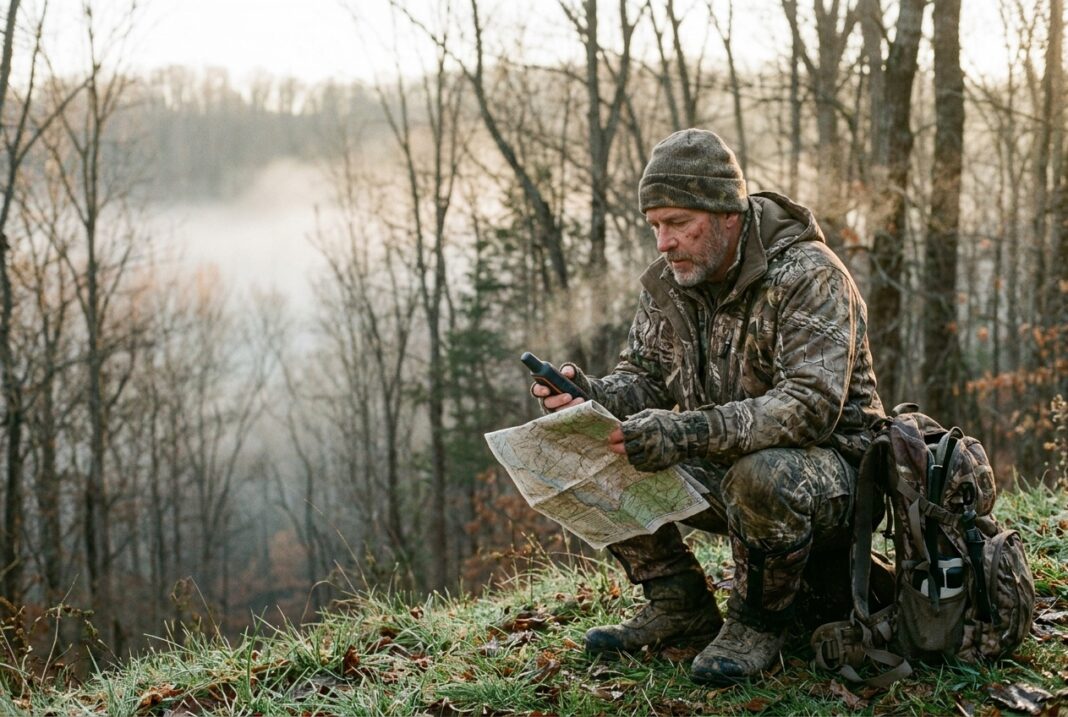
Scouting public ground works differently than scouting a farm you’ve hunted for a decade. You’re not just looking for deer sign — you’re looking for where other hunters aren’t willing to go. Onx or Google Earth gets you the topography, but boots on the ground tell you where the trail cameras and tree stands already are, and that’s information no app gives you.
Walk the property in the off-season when pressure is low and sign is still fresh from the previous fall. Look for the inconvenient spots: the creek crossing that requires wet boots, the ridge with no obvious trail access, the timber cut that grew up thick and ugly three years ago and that everyone else walks past. Public land bucks live in the friction points, and the hunters willing to deal with that friction are the ones tagging out.
Etiquette Matters More Than People Admit
Public land hunting has an unwritten code, and breaking it creates real friction between hunters sharing the same ground. Don’t set a stand within earshot of someone already set up. Don’t run trail cameras over another hunter’s bait pile or mineral site without knowing local rules — some states have banned baiting on public land entirely due to CWD concerns, and violating that isn’t just rude, it’s a citation waiting to happen. Pull your stands and cameras at the end of the season if your state requires it; plenty of WMAs mandate removal of all personal equipment by a set date, and conservation officers do check.
The hunters who get the most out of public ground season after season are the ones who treat it with the same respect they’d give a private lease. That reputation follows you, even on land where you’ll never see the same hunter twice.
The Bottom Line
Public hunting land works because state and federal agencies balance access with active wildlife management — but “open to the public” doesn’t mean “no rules apply.” Every tract has a management layer behind it, whether that’s a state DNR biologist trying to hit an antlerless quota or a national forest office coordinating a timber sale around your favorite ridge. Learn the specific rules for the specific ground you’re hunting, scout the inconvenient places, and treat the land and the hunters around you with respect. Do that, and public ground stops being a consolation prize. It becomes the proving ground where real hunters get made.