Antler Growth Explained: When and How Bucks Grow Racks
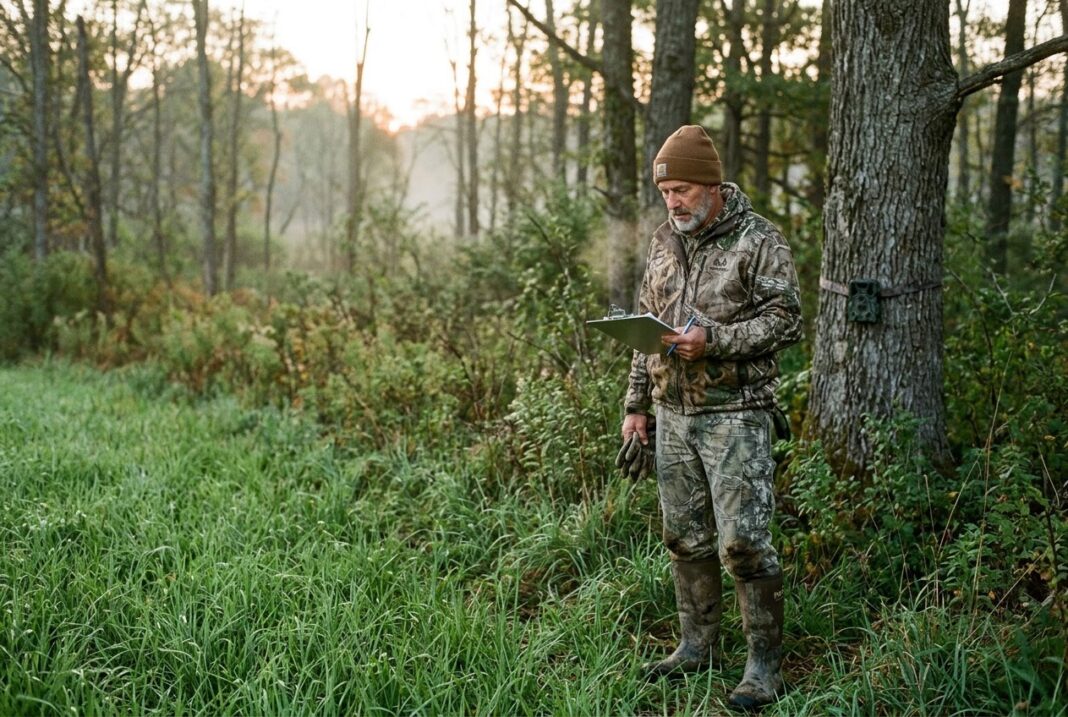
Every spring, something happens on whitetail property that most hunters never actually witness but talk about constantly: antler growth starts over from nothing. A buck that carried a 150-inch rack the previous fall is walking around bald by late winter, and within a few months he’ll be growing bone again, sometimes faster than any other tissue in the animal kingdom. If you hunt mature bucks, understanding this cycle isn’t trivia. It changes how you read trail cameras, how you judge a buck’s potential in July, and how you think about the land you manage.
Antlers are not horns. Horns are permanent and made of keratin. Antlers are shed and regrown every single year, and they’re actual bone, grown from a pedicle on the skull and fed by a network of blood vessels during the growing phase. The whole process is controlled by hormones that respond to changing daylight, which is why you can set your watch by the calendar almost as much as by the buck himself.
The Antler Cycle Starts With Shedding, Not Growing
Most hunters think of antler growth as starting in spring, but the real starting point is whenever the old set falls off. Shed timing varies by region, buck age, and even herd nutrition, but most bucks drop their antlers sometime between late December and March. Older, dominant bucks that fight more and burn more testosterone during the rut often shed earlier than younger bucks. I’ve picked up sheds from mature deer in my area as early as the first week of January, while two-and-a-half-year-olds in the same woods were still carrying hard antlers into March.
The drop happens because testosterone levels fall sharply after the rut. That drop weakens the connective tissue at the pedicle, and eventually the antler just lets go — sometimes both sides within hours of each other, sometimes weeks apart. Within days of shedding, the pedicle starts to heal over, and that healed-over tissue becomes the base for new growth.
Spring Growth: Soft, Fast, and Fragile
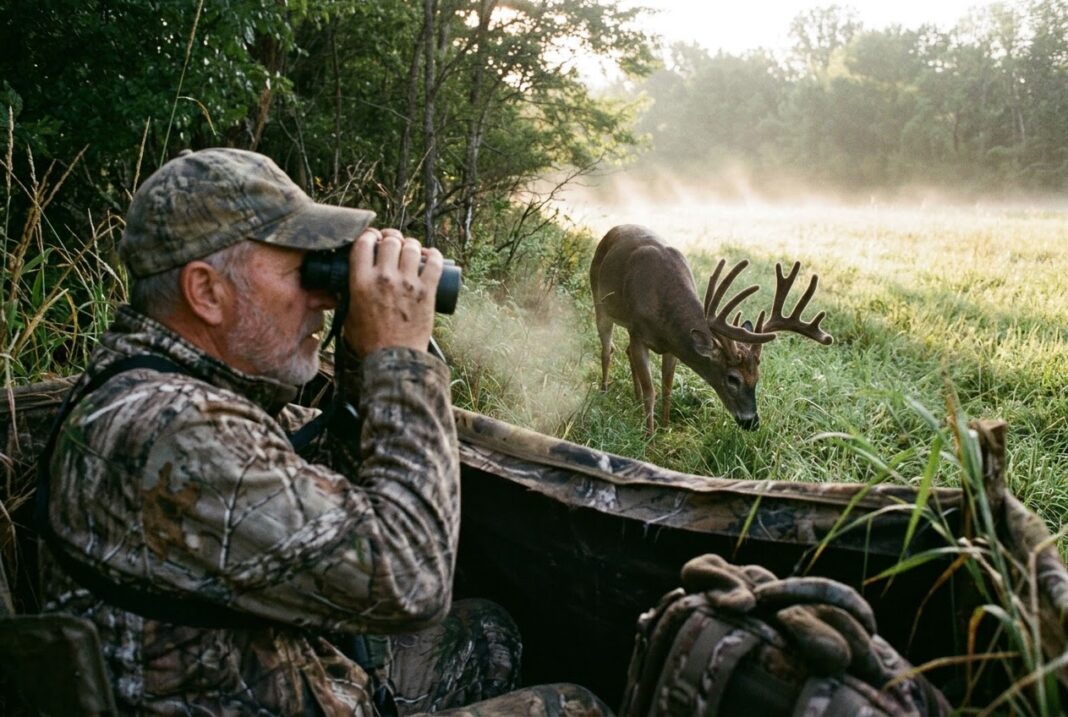
New antler growth typically begins in April across most of the whitetail’s range, though it can start earlier in southern states and later up north. This is the fastest-growing bone tissue known in mammals. A healthy mature buck can add more than an inch of antler length in a single week during peak growth in June and July. The tissue at this stage is cartilage-like, soft, and covered in velvet — a layer of skin packed with blood vessels and nerve endings that delivers the nutrients and minerals needed to build bone this quickly.
This is also the most fragile stage of the entire cycle. A buck in velvet that snags his rack on a fence or takes a hard hit can end up with a permanently deformed point, a drop tine that shouldn’t be there, or a kicker that throws his whole rack out of symmetry. I’ve watched a buck on one of my properties go from a clean, promising 8-point frame in June to a lopsided mess by August after what I assume was a fence encounter. He healed fine. His rack never looked right again.
Nutrition Drives What Genetics Allow
Here’s where a lot of hunters get the priorities backward. Genetics set the ceiling on antler potential, but nutrition determines whether a buck ever gets close to that ceiling. Protein and mineral intake during the growing season — particularly calcium and phosphorus — directly affects antler mass and point length. A buck on poor range, dealing with drought or overbrowsed habitat, can carry excellent genetics and still produce a mediocre rack because his body is prioritizing basic survival over bone growth.
This is exactly why food plot programs and habitat work matter so much more than most new hunters assume. The National Deer Association has published extensive research showing that herd nutrition, not just genetics or age, is one of the biggest variables land managers can actually control. You can’t change a buck’s genetic ceiling. You absolutely can change how much food is available to him in June and July when his body needs it most.
Age Still Matters — More Than Most People Want to Admit
I’ll say this bluntly because it needs saying: a lot of hunters overestimate how much a single year of extra nutrition will do for a young buck’s rack compared to what another year of age does. Bucks typically don’t reach their antler potential until they’re five and a half years old or older, and the difference between a three-year-old and a five-year-old on the same piece of ground can be staggering, even with identical food and genetics. I used to assume a big-bodied two-year-old with a wide rack was a stud in the making. I was wrong more than once. Some of those deer plateaued. Meanwhile a plain, forkhorn-looking yearling turned into the best buck I’ve ever taken off that farm three years later.
State wildlife agencies track this closely because it affects harvest regulations and antler point restrictions. Many state DNRs, including Wisconsin’s DNR, publish age-class data specifically because letting bucks reach maturity is one of the single biggest levers a hunter or landowner has over antler size on their property.
Velvet Shedding and Hardening: Late Summer Into Fall
By late August into September, testosterone levels start climbing again as daylight hours shorten heading toward fall. That hormone shift cuts off blood supply to the velvet, the antler fully calcifies into hard bone, and the velvet dries up and splits. Bucks speed up the process by rubbing on saplings and brush — which is also why you start seeing fresh rubs well before the rut actually kicks off. That rub isn’t aggression in the way most people picture it. It’s maintenance. It’s a buck literally peeling dead skin off his own head.
This transition from velvet to hard antler usually happens fast, often within a day or two once it starts. A buck that looked velvet-covered on a trail camera on a Tuesday can show up hard-antlered by the following weekend. If you’re running cameras through late summer, this is one of the more satisfying windows of the year to watch, because it’s the first real look at what a buck’s rack will actually look like going into the season.
Why Photoperiod Runs the Whole Show
The single biggest driver behind this entire cycle is daylight length, not temperature, not food availability on its own. Shortening or lengthening day length triggers the pineal gland to adjust melatonin production, which in turn regulates testosterone. That’s why antler cycles stay remarkably consistent year to year even when weather swings wildly — a mild winter or an early spring doesn’t shift the shedding and growing calendar nearly as much as people assume. Research summarized by agencies like the U.S. Fish and Wildlife Service on cervid biology backs this up: photoperiod is the dominant trigger, with nutrition and age acting as modifiers on top of that baseline schedule.
This matters practically because it means you can predict, almost to the week, when velvet will start shedding in your area based on past years, regardless of how strange the weather has been. It also means a buck under serious nutritional stress will still try to grow antlers on roughly the same timeline — he’ll just come up short on mass and tine length rather than growing on a delayed schedule.
What This Means for How You Hunt and Manage Land
Understanding the cycle changes a few practical things. First, trail camera inventory in July and August is a snapshot, not a final verdict — a buck can still add mass and tine length right up until velvet shedding. Don’t write off a buck in early summer just because he looks smaller than you hoped. Second, if you’re managing land for bigger bucks, your food plot and mineral program needs to be in place well before June, not scrambled together in August. The growth window is short, and a buck’s body either has what it needs during those weeks or it doesn’t. Third, give young bucks time. The numbers on age-class and antler development aren’t opinion — they’re consistent across state agency data and NDA’s research year after year.
If there’s one mistake I see repeated every season, it’s hunters judging a buck’s future based on a single summer photo instead of tracking him across years. Keep a folder, not just a phone full of random pictures. A buck’s growth story tells you more than any single rack ever will.
—