Treestands vs. Ground Blinds: Which Setup Fits Your Hunt
Every whitetail hunter eventually has this argument with himself, usually around 4:30 in the morning while loading the truck. Treestand or ground blind? Both work. Both kill deer every single season across every state where whitetails live. But picking wrong for the day’s conditions can cost you a shot, or worse, teach a mature buck exactly where not to walk next time.
This isn’t a debate with one correct answer. It’s a decision that changes based on terrain, wind, weather, your mobility, and honestly, your patience level. I’ve hunted both hard for over fifteen years, and I still get it wrong some mornings. Let’s break down what each setup actually does well, where it falls apart, and how to decide before you ever leave the house.
The Case for Treestands
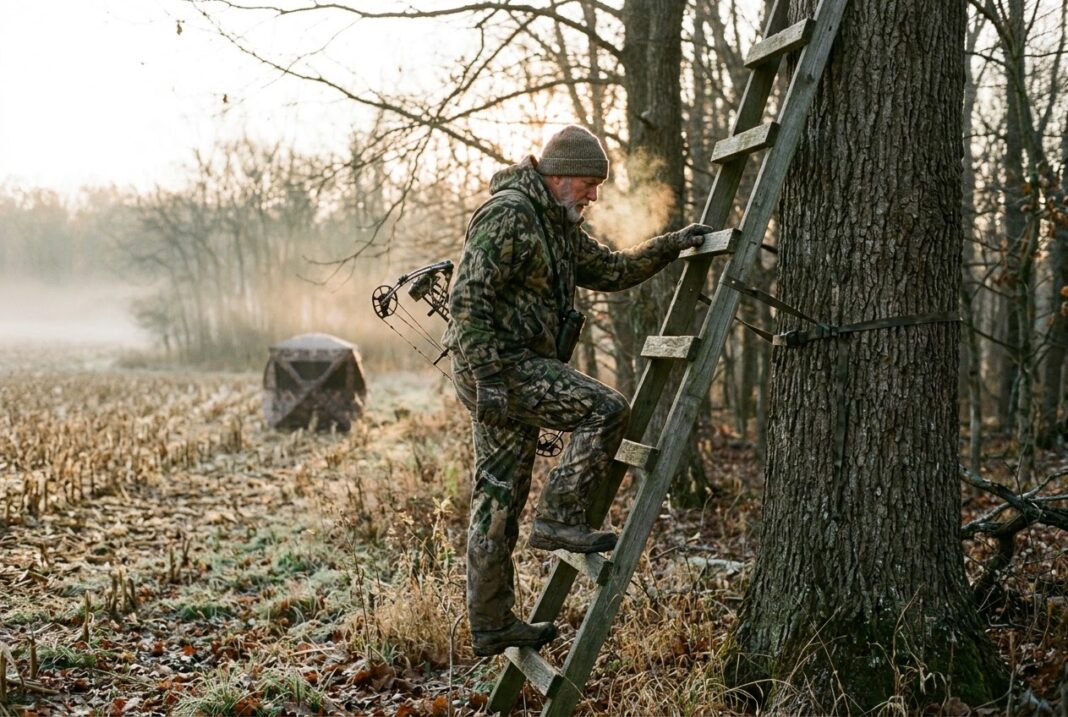
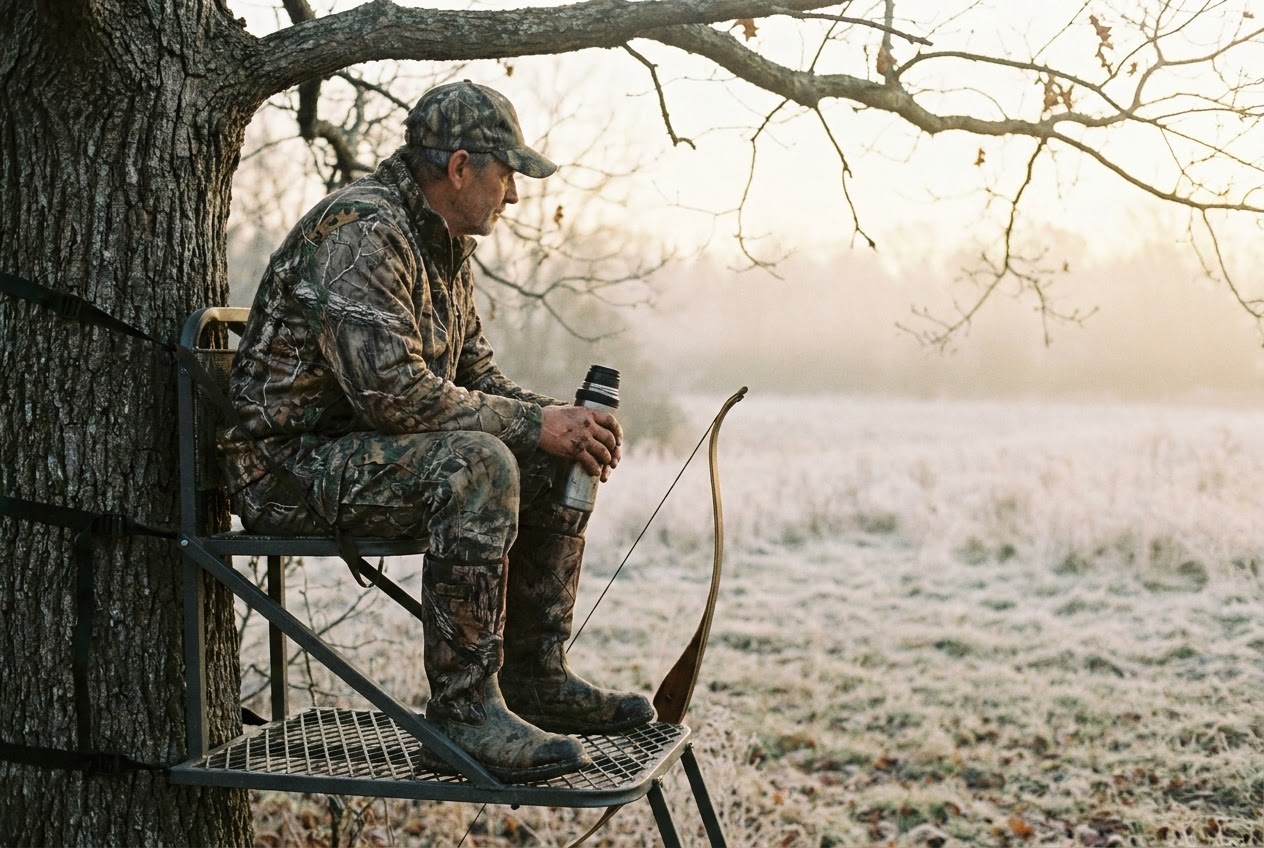
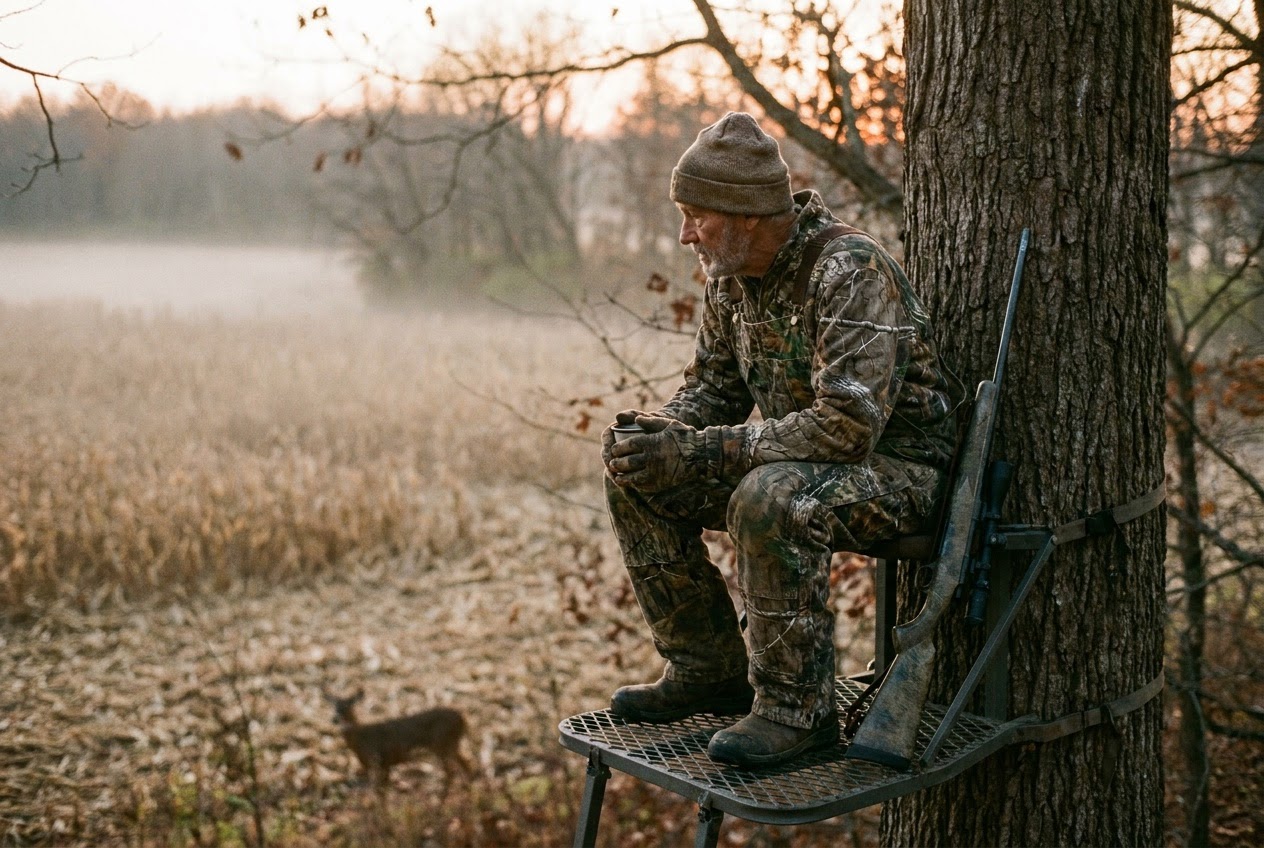
Elevation changes everything. Get fifteen to twenty feet up and your scent carries over a deer’s nose instead of straight into it. Your silhouette breaks up against the canopy. Your field of view opens up in a way that ground-level hunting just can’t match, especially in hardwoods where terrain features like ridges and benches funnel deer into predictable lanes.
Treestands also force you to commit to a spot. You pick a tree based on sign, wind, and entry route, and you hunt it. That commitment tends to sharpen your scouting. I’ve noticed hunters who run treestands almost exclusively tend to read terrain better over time, because the stand doesn’t move — they have to get the location right before the first sit, not adjust after the fact.
The downside is real, though. Climbing with a bow or rifle in low light is where accidents happen. The U.S. Fish and Wildlife Service and most state wildlife agencies list treestand falls as one of the leading causes of hunting injuries every year, and a harness isn’t optional gear — it’s the difference between a bad step and a hospital visit. I wear mine clipped in from the moment my boots leave the ground until they’re back on it, no exceptions, because I had a strap slip on a ladder stand years ago and the ten feet I fell taught me more than any safety pamphlet ever did.
The Case for Ground Blinds
Ground blinds solve problems treestands can’t touch. No trees in the area? No safe climbing spot? Hunting with a kid or a new hunter who needs room to move and talk quietly? Blind wins every time. They also hide motion far better than a treestand does — drawing a bow or shouldering a rifle inside a blind is nearly invisible to a deer outside, where the same movement from twenty feet up can still catch an eye if the animal happens to look your direction at the wrong second.
Blinds are brutal on wind management, though, in a different way than people expect. Scent pools at ground level instead of carrying up and over. If you’re not dead-on with your wind direction, a blind will bust you faster than a stand would. I’ve sat blinds where the wind did exactly what the forecast said it would at 6 a.m. and then swirled by 8, and deer that should’ve walked right past instead hung up fifty yards out, heads up, done for the day.
Weather is where blinds genuinely shine. Rain, wind, snow — you’re out of it. That comfort matters more than hunters like to admit. A hunter who’s warm and dry stays in the woods longer, and more hours in the stand (or blind) is still the single biggest factor in tagging a mature deer. The National Deer Association has pointed out in its annual deer reports that hunter effort and time afield correlate directly with harvest success, which tracks with what most of us already know from experience — the guy who sits through the drizzle usually beats the guy who went home early.
Terrain and Land Type Matter More Than Preference
This is where a lot of hunters get stubborn. They have a favorite setup and they force it onto ground that doesn’t suit it. Big hardwood ridges with mature timber? Treestands. Open ag fields, CRP grass, or clear-cuts with no good climbing trees? Blinds. Public land where you’re hunting pressured deer that have been shot at from stands their whole lives? Sometimes a blind tucked into natural cover does something a stand can’t — it changes the picture deer have learned to watch for.
If you’re hunting public ground managed by your state agency or the U.S. Forest Service, check local regulations before you hang anything. Some national forests and state wildlife management areas restrict permanent stands, require stands to be removed seasonally, or limit screw-in steps that damage trees. I’ve seen guys lose expensive setups because they didn’t read the regs for the specific unit they were hunting. It takes ten minutes online to confirm the rules. Do it before the season, not after a conservation officer finds your stand.
Scent and Wind: The Real Tiebreaker
If I had to pick one factor that decides treestand versus ground blind on any given morning, it’s wind behavior for that specific piece of ground. Elevation generally helps scent carry over a deer’s nose, but only if the thermals are doing what you expect. Early morning thermals often fall as cold air sinks, which can drag your scent down into a blind’s exact entry lane even if the surface wind reads correctly on an app.
Blinds need a tighter, more literal wind read because there’s no elevation buffer helping you. I treat blind mornings with more suspicion than treestand mornings — I’ll walk away from a blind sit faster than I’ll walk away from a stand if the wind feels wrong, because a blinded-up hunter with bad wind doesn’t get a second chance at that deer for weeks.
Mobility and Setup Speed
Climbing stands and hang-ons give you flexibility a fixed blind doesn’t. You can move fifty yards in response to a scrape line or a new rub without much trouble. Ground blinds, especially the pop-up style, are more portable than people assume, but they need time to “brush in” and lose their human scent and newness. Drop a blind the morning of a hunt and you’re often hunting a spot deer are actively avoiding because it wasn’t there yesterday.
My rule: blinds go out at least a week ahead whenever possible, longer if I can manage it. Stands can go up closer to the hunt since deer are generally less suspicious of something above their sightline, especially once leaves are down and they’ve gotten used to seeing odd shapes in trees all fall.
Comfort, Noise, and the Human Factor
Don’t underestimate your own limits here. A hunter who’s miserable, cold, or cramped doesn’t sit still, and a hunter who’s fidgeting gets picked off by deer regardless of elevation or cover. If you’ve got back or knee problems that make climbing risky, a blind on a good travel corridor will put more meat in the freezer than a stand you’re afraid to climb into.
Blinds also let you bring another person without much risk — kids, a spouse learning to hunt, a buddy with a camera. That shared experience matters for keeping people in the sport, and it’s worth factoring into the decision beyond pure tactics.
My Honest Take
I run stands early season when leaves still hide a platform and I need elevation on active sign. I switch to blinds once the rut gets unpredictable and deer start cruising field edges at odd hours, because the comfort lets me sit longer without moving. Late season, in brutal cold, blinds win almost every time — I’ve killed more hard-winter bucks from a blind with a propane heater at my feet than I ever did shivering in a stand waiting for one more half hour of daylight.
Neither setup is better. They’re tools for different jobs, and the hunters who kill consistently are the ones who match the tool to the day instead of forcing the day to fit their favorite tool.
Scout both options into your property before the season gets busy. A stand tree with good cover and a blind location brushed in early give you options when the wind or weather changes your plans at the last minute — and it will.
—