Fixed vs. Mechanical Broadheads for Whitetail Deer
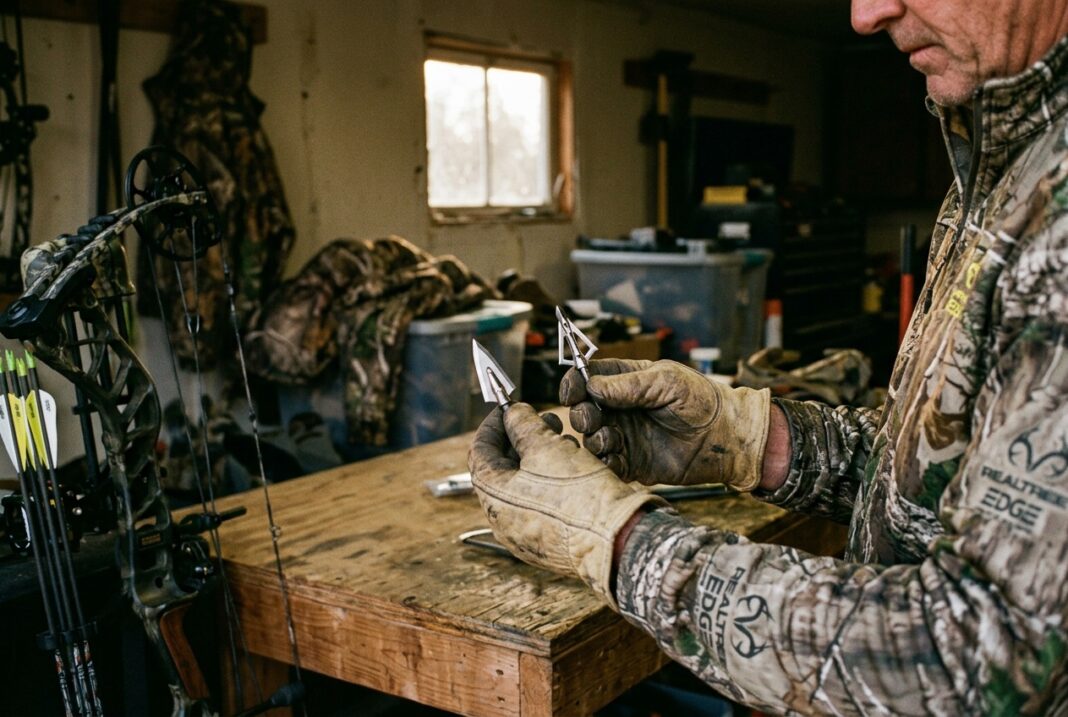
Every bowhunter eventually stands at the counter of a sporting goods store, holding two packages, and asking the same question: fixed or mechanical? It’s one of the oldest debates in archery, and it never really gets settled because both broadhead styles kill deer. The real question isn’t which one is “better” in some universal sense — it’s which one is better for you, your bow setup, your shot discipline, and the terrain you hunt.
I’ve shot both extensively over two decades of chasing whitetails, and I’ve had good and bad experiences with each. That’s the honest starting point for this conversation. Anyone who tells you one style is flat-out superior is selling something or hasn’t hunted enough seasons to see both fail under the wrong conditions.
Let’s break down the mechanics, the trade-offs, and the situations where each broadhead type earns its place in your quiver.
What Fixed-Blade Broadheads Bring to the Table
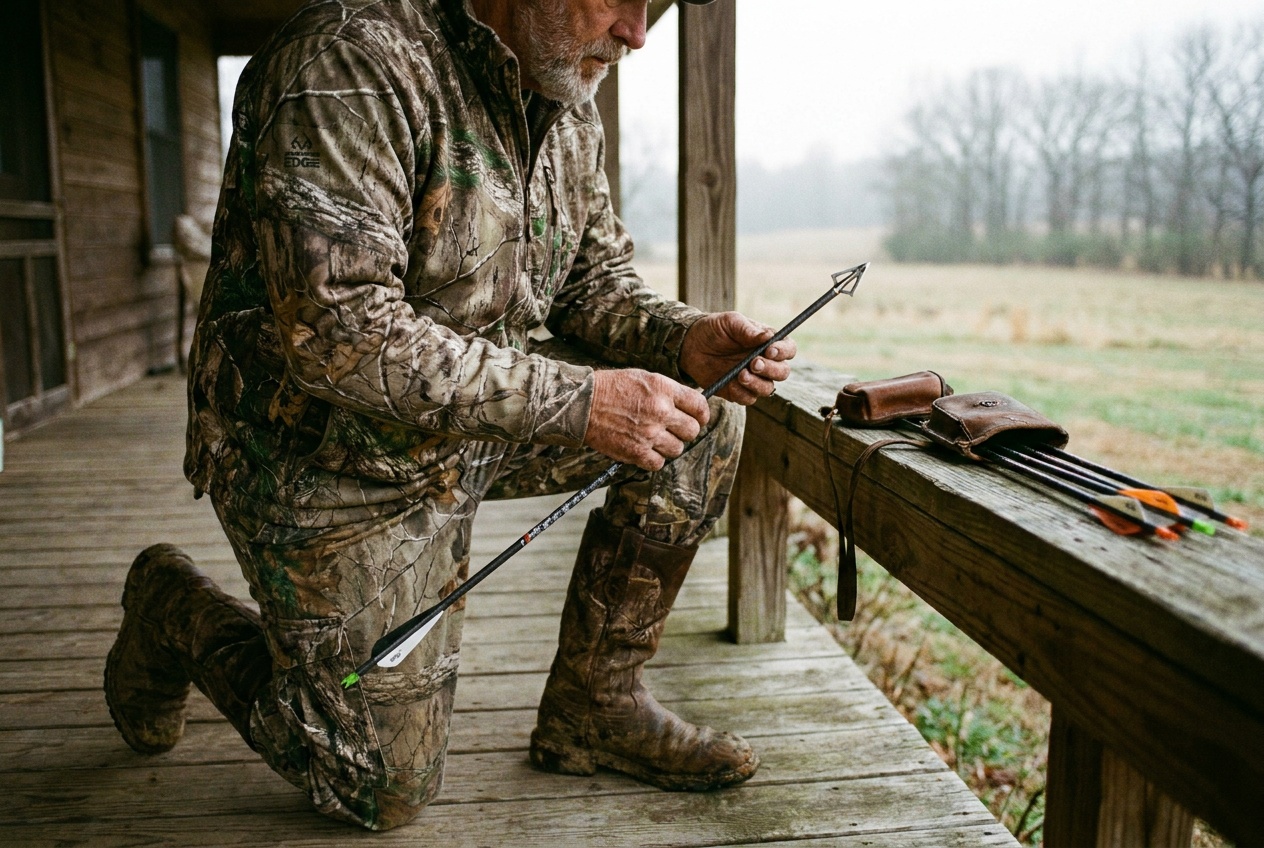
Fixed-blade broadheads are the simplest, most mechanically honest option in archery. The blades are permanently set at the ferrule — no moving parts, no rubber bands, no deployment to worry about. What you see is exactly what will happen at impact, every single time.
That simplicity translates directly into reliability. There’s no chance of a blade failing to open because it caught on a rib or a heavy shoulder bone. Fixed blades punch straight through on impact, and they tend to handle bone contact better than mechanicals because they don’t rely on kinetic energy to trigger deployment. If you’re hunting big-bodied Midwestern bucks in November, when a frontal or quartering-toward shot might mean driving through a shoulder blade, a stout fixed-blade head is often the safer bet.
The trade-off is accuracy tuning. Fixed blades create more drag in flight, which means they’re more sensitive to a bow that isn’t perfectly tuned. A slightly cammed-over arrow or inconsistent fletching can send a fixed-blade broadhead planing off target at 30 yards in a way a mechanical simply won’t. If your bow isn’t tuned to near-perfect arrow flight, fixed blades will expose that flaw quickly — sometimes at the worst possible moment.
The Case for Mechanical Broadheads
Mechanical broadheads fly like field points. That’s the single biggest selling point, and it’s not marketing fluff — it’s physics. Because the blades stay folded against the ferrule until impact, there’s minimal wind planing and drag in flight. For hunters who practice with field tips all summer and don’t want to re-sight their pins for broadheads, mechanicals close that gap better than almost anything else on the market.
They also tend to open larger cutting diameters than fixed blades of comparable size, which can mean more devastating blood trails on pass-through shots to soft tissue. I’ve recovered deer inside 60 yards from mechanical hits that left a blood trail you could follow at a jog. When everything goes right — clean angle, no major bone, adequate kinetic energy — mechanicals are brutally effective.
But “when everything goes right” is doing a lot of work in that sentence. Mechanicals need enough energy to deploy the blades and still drive through the vitals. Low poundage setups, longer shots where arrow speed has bled off, or a hit that clips a rib can all rob a mechanical broadhead of the terminal performance it’s designed to deliver. The National Deer Association has published field-recovery data over the years showing that broadhead failures — whether from bone deflection or poor blade deployment — are a real, if uncommon, factor in lost-deer statistics among bowhunters. That’s not a reason to panic, but it is a reason to be honest about your setup’s limitations.
Penetration, Blood Trails, and the Realities of Bone
Let’s talk bone, because that’s where this debate actually lives or dies in the field. A whitetail’s vitals are protected by ribs, a spine, and — depending on shot angle — a scapula that can be surprisingly dense on a mature buck. Fixed blades, especially two-blade designs, tend to slice through bone rather than deflect off it. Three- and four-blade fixed heads add more cutting surface but also more resistance, which can slow penetration on marginal hits.
Mechanicals, because they open after impact, sometimes lose critical momentum right at the moment they meet resistance. I’ve talked to enough taxidermists and guides to know this isn’t a rare edge case — it’s a pattern. If you’re consistently shooting quartering-away or slightly forward angles where a rib or shoulder is in play, that’s a point in favor of fixed blades or a hybrid design with a stout ferrule tip.
On the other hand, if your shot discipline is tight — broadside or slight quartering-away, inside 25 yards, full draw held steady — bone is rarely a factor, and the wound channel advantage of a mechanical becomes the deciding variable. This is really a conversation about shot selection as much as gear selection. Know your comfort zone and pick a broadhead that matches it.

My Own Mistake: A Lesson in Broadhead Failure
I’ll be blunt about something I got wrong. A few seasons back I switched to a popular mechanical head mid-October because a buddy swore by it, and I didn’t shoot enough practice arrows through it before opening morning. Three days later I had a quartering-toward shot on a good buck at 22 yards — closer than I’d normally take that angle, but the deer was calm and I got greedy. The blade clipped the near shoulder, didn’t fully deploy, and I ended up with a marginal hit and a recovery that took four hours and a lot of soul-searching.
That deer lived, as far as I ever confirmed, though I never found him. The lesson wasn’t “mechanicals are bad.” The lesson was that I changed equipment too close to the season and didn’t respect the limitations of what I was shooting.