Whitetail Bedding Areas: How to Find and Hunt Them
Every serious whitetail hunter eventually arrives at the same realization: you don’t kill mature bucks by hunting food, and you don’t kill them by hunting sign alone. You kill them by understanding where they sleep and how they move to and from that sanctuary. Bedding areas are the anchor point of a buck’s entire daily routine, and if you can’t identify them, you’re essentially guessing at everything else — stand locations, wind direction, entry routes, all of it.
This isn’t a new idea. Hunters have chased bedding sign for generations. What separates the guys who consistently punch tags on mature deer from the ones who don’t is precision. It’s not enough to know “deer bed in that general ridge.” You need to know which specific eight-foot patch of grass a buck folds his legs into on a north wind, and why he picked that spot over the one thirty yards away.
We’re going to walk through how to actually locate bedding areas — not just guess at them from the truck — and how to build a hunting strategy around them without blowing the whole thing up in the process.
What Makes a Whitetail Bedding Area
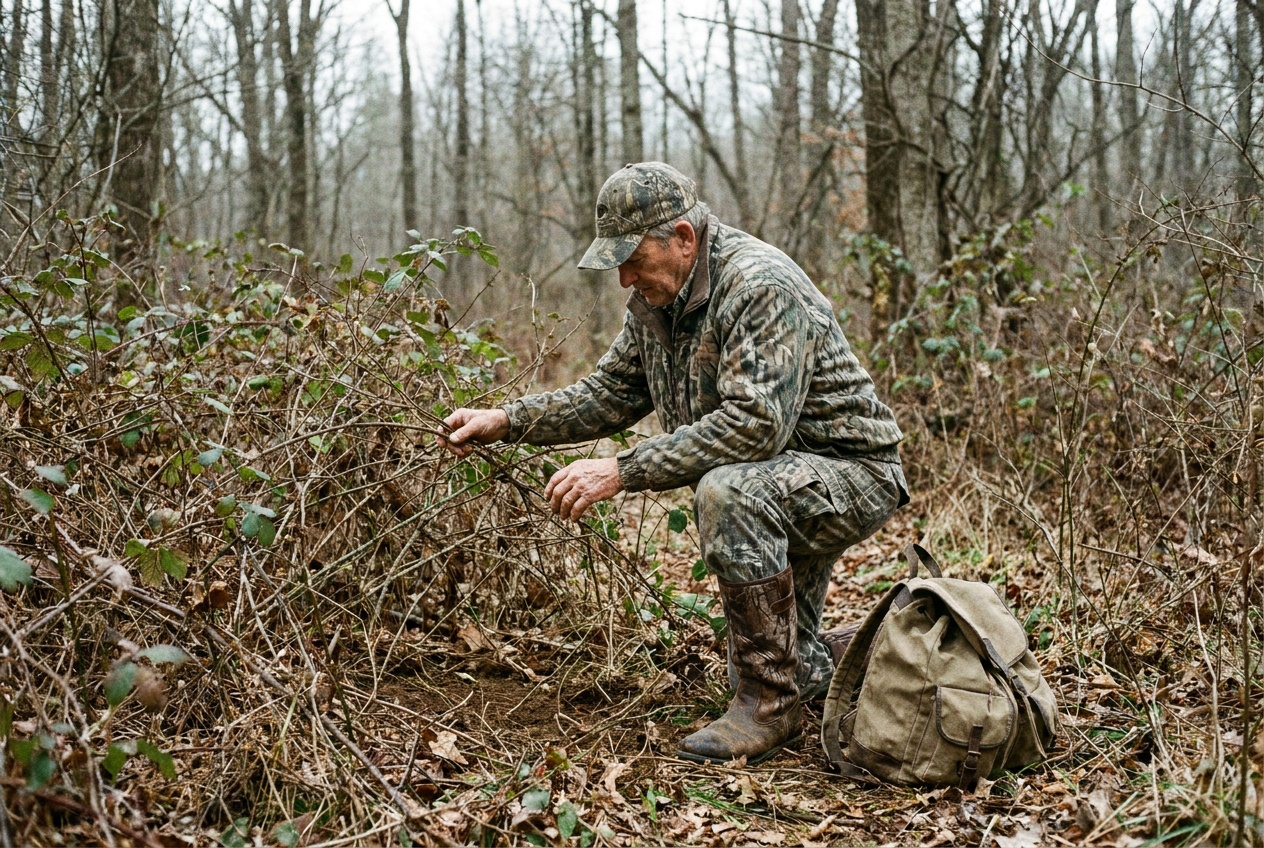
A bedding area isn’t a single bed. It’s a zone of security that a deer, or often several deer, return to because it checks a specific set of boxes: thermal protection, visual cover, a defensible wind position, and proximity to escape routes. Bucks in particular gravitate toward spots where they can see, smell, or hear danger before it gets close — which is why you’ll so often find beds on secondary points, inside blowdowns, or tucked into thick regrowth on the lee side of a ridge.
Terrain matters more than most hunters give it credit for. According to research compiled by the National Deer Association, mature bucks consistently select bedding sites that maximize both cover density and sensory advantage — meaning they’re not just hiding, they’re positioning. That distinction changes how you scout. You’re not looking for “thick cover.” You’re looking for thick cover in the right spot relative to wind, water, and food.
Doe bedding areas behave differently and are worth separating mentally from buck beds. Does bed in loose groups, often closer to food sources, and their bedding is more about efficiency than security. Bucks, especially once they hit three and a half years old, bed alone or in small bachelor groups earlier in the season, and they prioritize defensibility over convenience. If you’re targeting a specific mature buck, doe bedding sign will mislead you if you don’t know the difference.
Reading the Terrain: Topography Clues That Reveal Beds
Before you ever set boot to dirt, a topo map and an aerial image will tell you 70 percent of what you need to know. Look for terrain features that create natural funnels and pinch points near thick cover — saddles, benches, inside corners of field edges, and secondary ridges running off a main spine. Bucks bed on these features because they offer a wind advantage: air currents swirl predictably around topography, and a buck bedded on the downwind side of a knob can smell anything approaching from below while watching anything approaching from above.
Water edges deserve more attention than most hunters pay them. A slough, marsh, or river bottom with dense cattails or willow creates a natural fortress — hard to approach quietly, hard to see into, and often overlooked because it’s miserable to hunt. Miserable to hunt is exactly why mature bucks like it.
Clear-cuts and recently logged sections of national forest ground are another underrated bedding magnet. If you’re hunting public land managed by the U.S. Forest Service, pull up recent timber harvest records. A cut that’s three to seven years old regenerates into exactly the kind of waist-high, stem-dense cover bucks want to disappear into. Most hunters walk past this stuff because it’s brutal to move through. That’s the point.
Scouting Without Blowing the Whole Thing Up
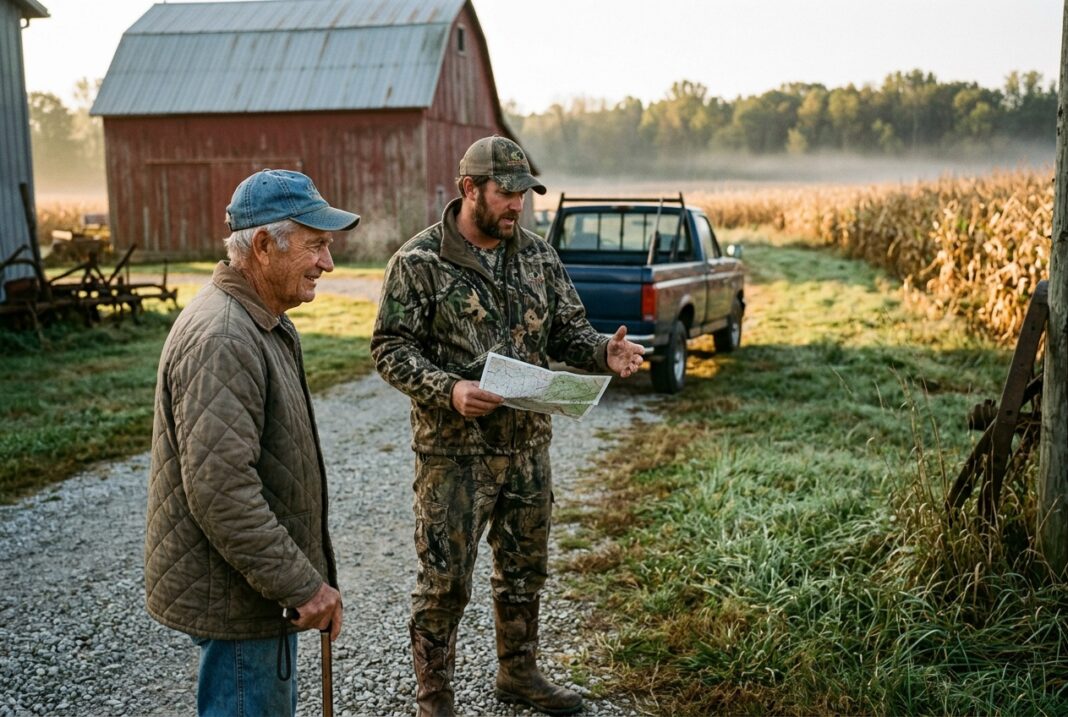
Here’s where I’ll be blunt: most hunters scout too much, too late, and too close. E-scouting should do the heavy lifting before you ever set foot on the property. Use aerial imagery to mark three or four high-probability bedding zones based on the terrain principles above. Then confirm them with boots on the ground — once, ideally in late winter or summer when pressure tolerance is highest and sign from the previous season is still visible.
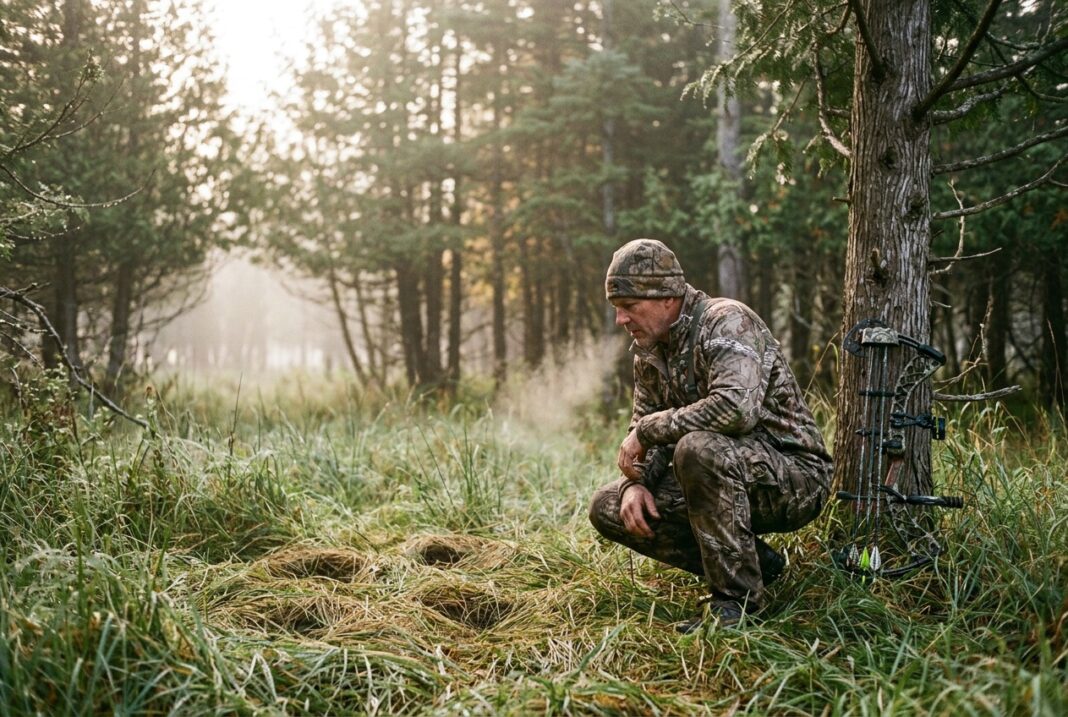
Look for the beds themselves: oval depressions in grass or leaf litter, often facing downhill or downwind. Rubs and scrapes near a bedding zone tell you it’s a buck bed, not just deer traffic. Trail density radiating outward, rather than through the core, tells you you’ve found the sanctuary and not just a travel corridor.
Many state wildlife agencies publish habitat and land-use data that can shortcut this process. The Michigan DNR, for example, maintains detailed forest cover and land management layers that overlay cleanly with hunting apps, letting you identify cover-age transitions without ever walking the ground. If your state offers something similar, use it. It’ll save you a season of wasted boot leather.
The Mistake That Taught Me to Slow Down
I’ll own this one because it cost me a deer I’d been watching on camera for two full seasons. I found what I was certain was his bedding area — a thick finger of multiflora rose jutting off a ridge point, textbook terrain, everything lined up. So I did what a lot of hunters do when they get excited: I walked straight through the middle of it in October to “confirm” the beds I could already see from the drone footage.
He never used that bedding area again that fall. Not once, according to three cameras I had ringing the property. I’d traded one afternoon of confirmation for an entire season of access. The lesson stuck with me hard: once you’ve built a strong case for a bedding location from aerial imagery, sign, and camera data, you don’t need to walk into the core to prove it. Confirm from the edges. Stay out of the middle. The deer will tell you if you’re right by continuing to use it — and they’ll tell you if you’re wrong by disappearing, which is exactly what happened to me.
Setting Up Stands Around Bedding Areas
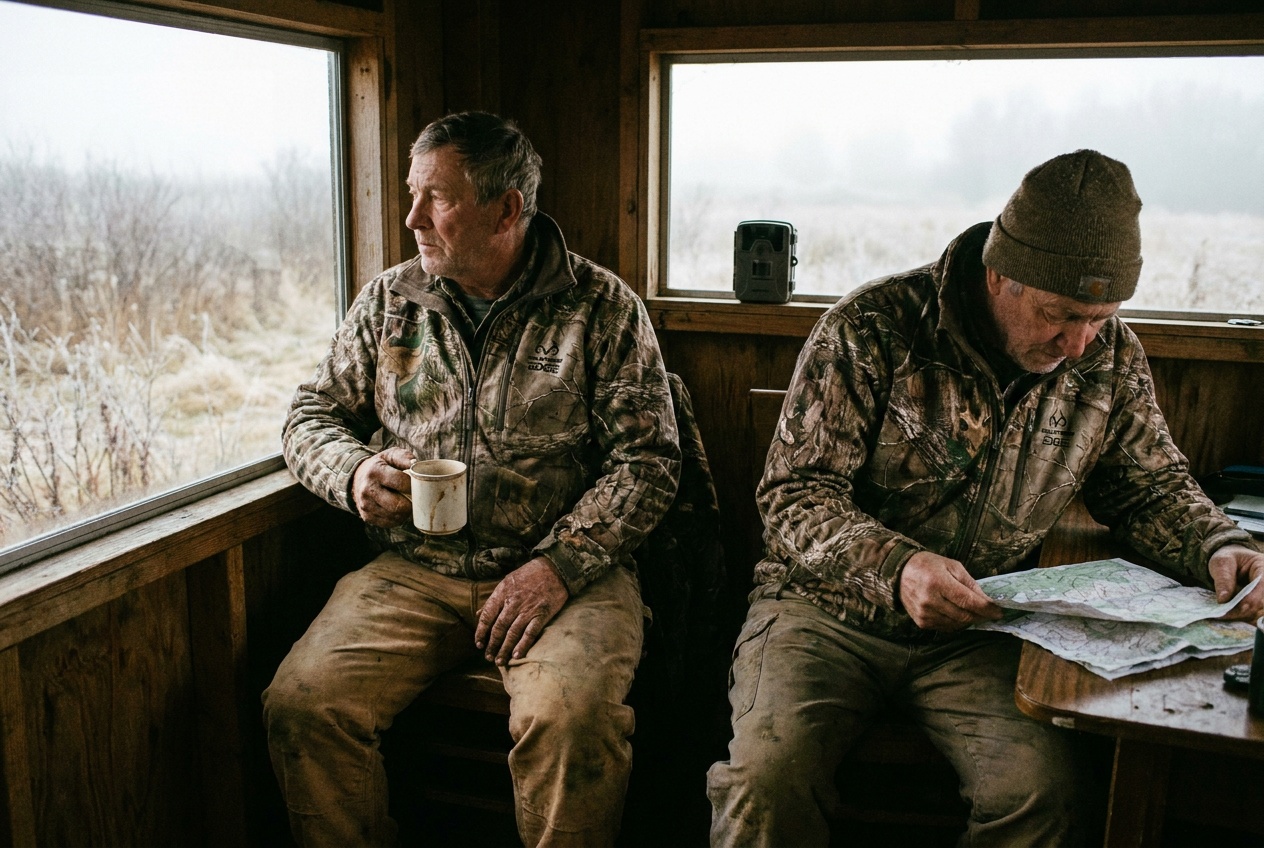
Once you’ve located a bedding area with confidence, the temptation is to hunt it directly. Resist that. Hunting inside or adjacent to a bedding area on a whim, without a clear wind and entry plan, is how you turn a great spot into a dead spot. The smarter play is hunting the travel corridors between bedding and food — pinch points, saddles, or field edges within 100 to 200 yards of the bed, where a buck is still cautious but moving with intent, usually in the last hour of daylight.
For morning hunts, the calculus flips. You’re now trying to catch a buck before he re-enters the bedding area, which means your stand needs to sit tight to the bed’s edge without being inside the deer’s core comfort zone. This is precision work. A stand fifty yards too close and you’ll bump him on entry. Fifty yards too far and you’ll never see him before he commits to the thicket.
Wind discipline isn’t optional here — it’s the entire game. A bedding area is a scent trap by design; the same terrain features that give a buck a wind advantage also mean your access route needs to respect that same wind, every single sit. If the wind isn’t right for a clean approach and a clean stand angle relative to the bed, don’t hunt it that day. Save it. Bedding-area stands are not spots you burn through trial and error — you typically get a handful of clean sits per season before the deer catches on.
Access Routes Matter More Than the Stand Itself
I’d argue access is the single most under-discussed part of hunting near bedding areas. Hunters obsess over stand height, camera angles, and scent control, then walk straight past a bedding area’s downwind edge to get to their tree. That single mistake undoes everything else you’ve done right.
Plan your entry and exit routes using terrain to break line of sight and wind to carry your scent away from the bed at all times — not just during the walk in, but during the two or three hours you’re sitting there before deer start moving. Creek bottoms, ditches, and low ground are your friends for this. If you can drop below the sightline of a bedding ridge and follow a drainage to your stand, you’ve just extended the life of that setup by weeks.
Public Land Adds a Layer of Difficulty — and Opportunity
Bedding-area strategy on public ground carries extra weight because you’re not the only hunter reading the terrain the same way. If you’ve found an obvious bedding pocket near a trailhead or parking area, assume someone else has found it too. The better public-land bedding areas are the ones requiring effort to reach — a half-mile walk, a water crossing, a nasty side-hill nobody wants to climb twice. Pressure data from the U.S. Fish and Wildlife Service on public hunting access consistently shows hunter density drops sharply beyond the first quarter mile from access points. Use that. Distance is often your best scent-control and pressure-management tool combined.
Putting It All Together
Finding a whitetail bedding area isn’t a mystical skill — it’s terrain literacy combined with patience and restraint. Study the map, confirm from a distance, resist the urge to walk the core, and build your stand strategy around clean wind and quiet access rather than proximity for its own part. Bucks don’t reward hunters who find their bedroom. They reward hunters who find it and have the discipline to leave it alone until the moment is right.
Get this part of your season right, and everything else — stand selection, timing, even your rut strategy — gets dramatically easier. Get it wrong, and you’ll spend the season chasing a buck that already knows you were there.
—