How to Find Landowners Who Will Grant Hunting Permission
Public land gets crowded fast, and anyone who’s hunted a popular national forest unit during the rut knows the feeling of finding a fresh boot print in “your” spot. That’s why private land access remains the single biggest advantage a serious whitetail hunter can build. Not gear, not scent control, not the newest broadhead. Access. And access almost always starts with a knock on a door and a conversation you’re not entirely comfortable having.
Finding landowners who will grant hunting permission isn’t luck. It’s a skill, and like shooting a bow or reading wind, it improves with repetition and a willingness to fail a few times before you get it right. I’ve been turned down more times than I can count, and honestly, the rejections taught me more than the yeses did.
This guide walks through the actual process — from scouting property lines on a map to the words you say standing on someone’s porch — so you can start building the kind of private land access that turns into a decade-long hunting relationship instead of a one-season fluke.
Start With the Map, Not the Truck
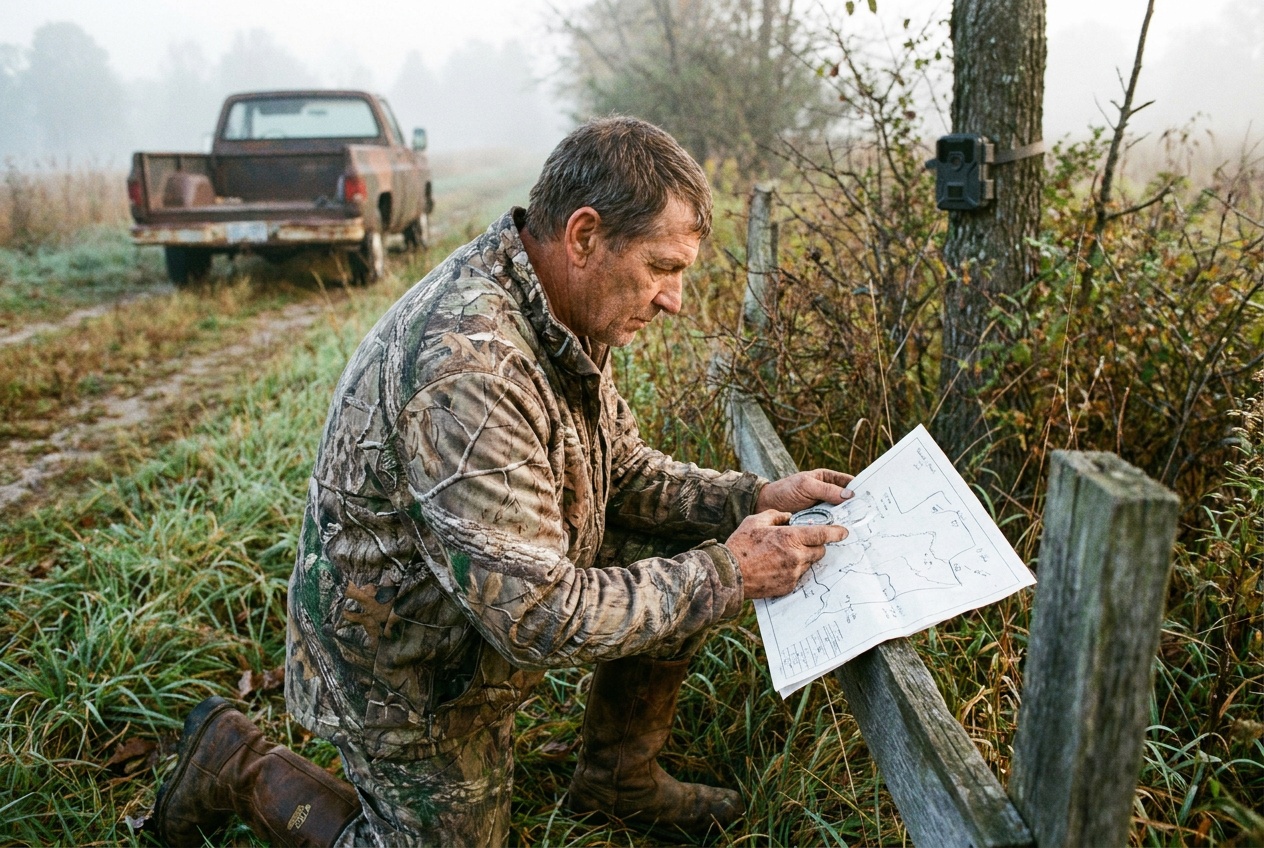
Too many hunters drive rural roads hoping to spot deer sign from the window, then knock on the nearest farmhouse. That’s backwards. Do your homework first. County GIS websites and plat map services will show you exact parcel boundaries, acreage, and often the owner’s name and mailing address before you ever leave your kitchen table. Most counties host these records online for free, and apps like onX or BaseMap layer that same ownership data directly onto satellite and topo imagery.
Use this stage to identify parcels with real potential — timber edges, creek bottoms, standing corn next to bedding cover, funnels between two larger tracts. You want to walk up to a landowner already knowing something specific about their ground. Nothing kills a permission request faster than sounding like you’ll hunt anywhere, which tells the landowner you don’t actually care about their property, just that it exists.
It also pays to understand the broader land-use picture in your state. The National Deer Association regularly publishes research on how shrinking huntable acreage and rising land leasing are changing access nationwide — data that’s worth understanding before you assume every “no” is personal. In a lot of counties, you’re not competing with other hunters for permission anymore. You’re competing with outfitters offering cash leases.
Timing Is Everything — And I Learned That the Hard Way
Late August, two years ago, I knocked on a farmhouse door at 7:45 on a Sunday morning wearing camo and carrying a rangefinder like an idiot. The guy answered in his church clothes, clearly annoyed, clearly late. I stumbled through my pitch, he said “maybe some other time,” and shut the door. That “maybe” was a no, and I knew it before I got back to the truck.
The mistake wasn’t the ask. It was the timing and the presentation. Showing up mid-afternoon on a weekday, in normal clothes, without gear slung over your shoulder, reads as respectful and low-pressure. Farmers are busiest at dawn, dusk, and during planting or harvest — approach outside those windows. Late summer, after crops are in and before bow season opens, tends to be the sweet spot. Landowners aren’t stressed about weather or equipment breakdowns yet, and they’ve got a little more patience for a stranger at the door.
I go back to that farm every August now, just to say hello, even on years I don’t ask to hunt. Consistency erases first impressions eventually. It took three years, but he finally said yes — and now he calls me when he sees rubs along his fence line.
The Cold Knock: What to Say and What to Avoid
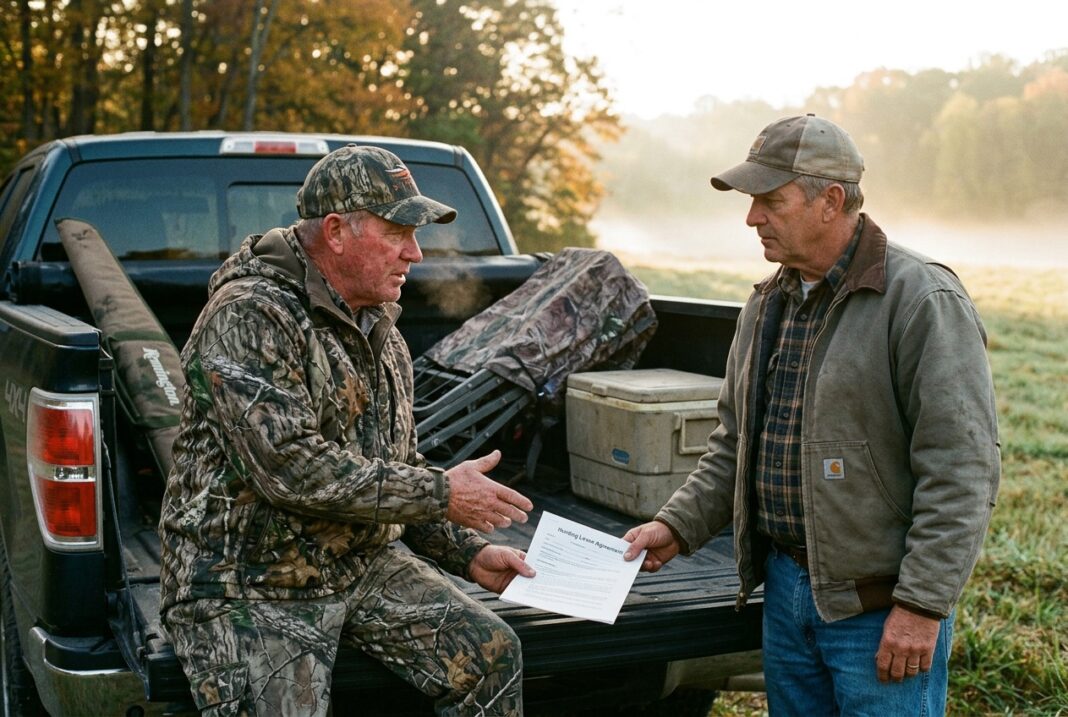
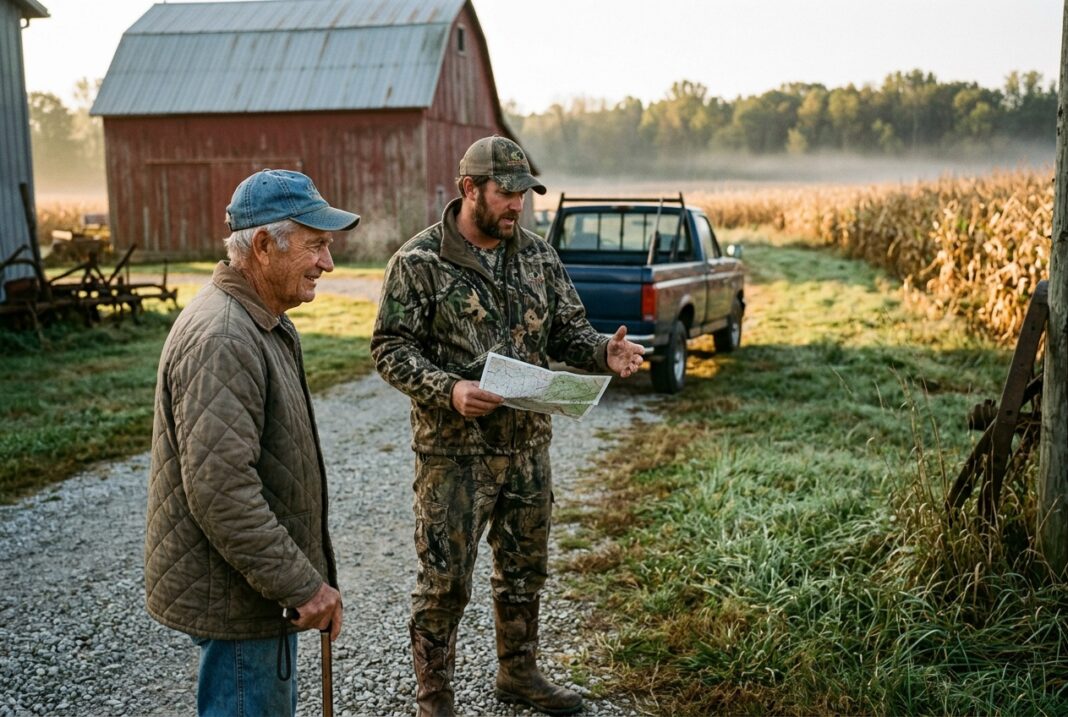
Keep it short. Introduce yourself by name, state clearly that you’re a local hunter (or explain your connection if you’re not), and ask directly if they’d consider allowing bow or gun hunting on a specific piece of their ground. Landowners can smell a script, so don’t oversell yourself with a resume of hunting achievements nobody asked for.
What works: mentioning you noticed deer sign near a specific fence line, offering to check in before every visit, agreeing upfront to whatever restrictions they set — no vehicles in the field, no hunting near livestock, family only during rifle season, whatever it is. What doesn’t work: leading with “will you sign this liability waiver,” bringing a buddy they’ve never met, or asking about trophy potential before you’ve even secured a yes.
Bring a business card if you have one, even a simple one with your name and phone number. It signals seriousness without demanding anything in return. And always, always thank them regardless of the answer. Rural communities talk, and a gracious “no” today can become a “yes” next season once your name circulates as one of the polite ones.
Know the Rules Before You Ask
Every state treats trespass and hunting-without-permission differently, and the penalties are more serious than most hunters assume. Some states require written permission in hand; others only need verbal consent but hold you liable if you can’t prove it was given. Before you set foot on any private ground, check your state agency’s trespass statutes — Wisconsin DNR’s trespass guidance is a solid example of how detailed these rules can get, covering everything from posted-sign requirements to what counts as adequate notice.
This matters for a blunt reason: one bad interaction with an angry landowner, sheriff’s deputy, or game warden can follow you. Counties are small, word travels, and a citation for trespassing will close doors on properties you haven’t even approached yet. Do the permission the right way, every time, even when it’s inconvenient.
Building a Relationship That Outlasts One Season
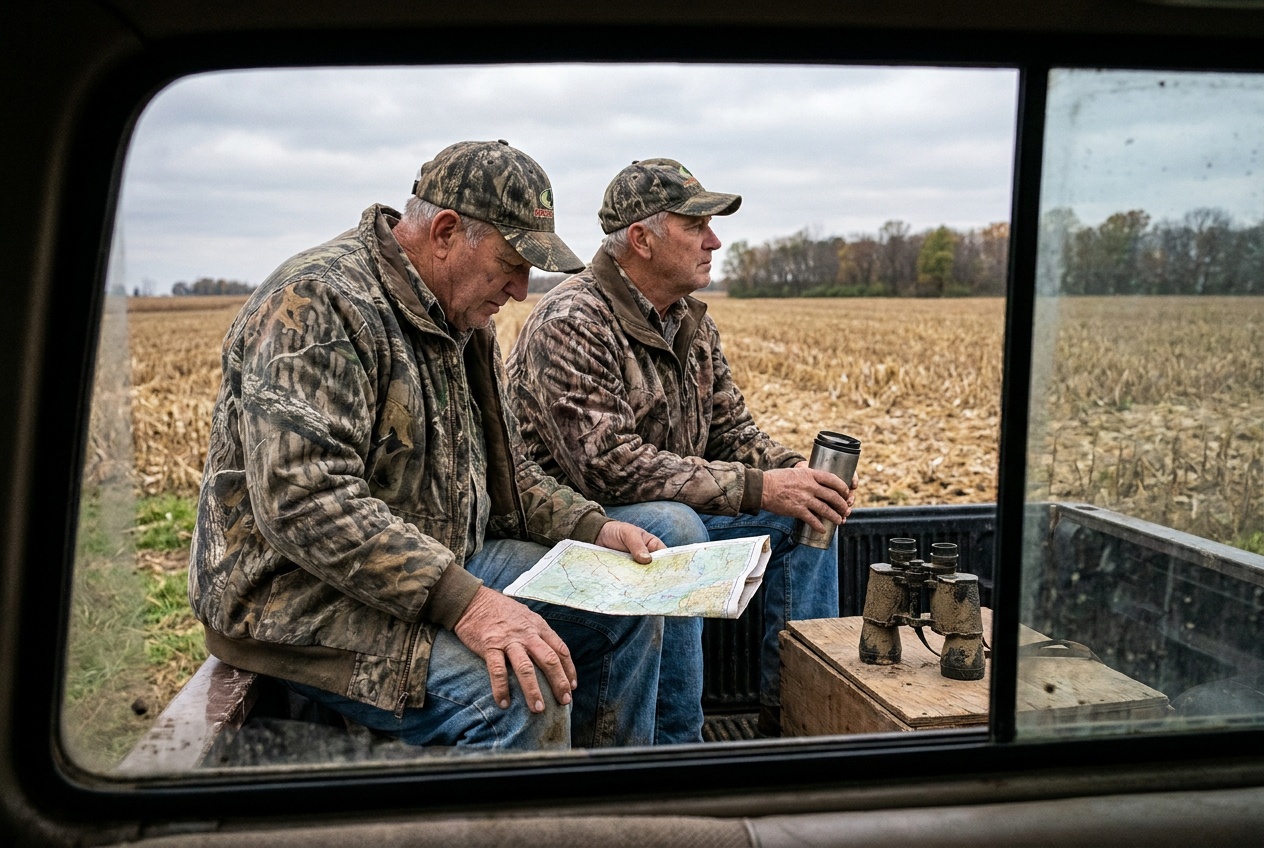
Permission you earn once and never maintain is permission you’ll lose. The hunters who keep the same farms for twenty years treat access like a friendship, not a transaction. That means showing up with something in return — helping move hay bales, fixing a fence you noticed was down, dropping off a few pounds of venison after a successful hunt, or simply calling to update them on what you’re seeing on their land throughout the season.
I keep a short list of every landowner who’s ever given me permission, yes or no, with notes on what they said and when I last talked to them. It sounds excessive until you realize how much a five-minute phone call in July — just checking in, no ask attached — does for your standing come September. Landowners remember who treats them like a person and who treats them like a resource.
Respect their operation, too. If they’re running cattle, know their rotation schedule. If they’re row-crop farmers, understand when equipment will be in the field and stay out of the way. A hunter who understands agriculture earns trust faster than one who only understands deer.
When to Walk Away
Not every “yes” is worth taking. If a landowner seems reluctant, adds restrictions that make the property unhuntable, or clearly only agreed to get you off the porch, don’t push it. A resentful yes turns into a revoked yes by October, and you’ll have burned a relationship for nothing. It’s better to leave a card, thank them for their time, and check back in a year than to force an awkward arrangement neither side wants.
I’ll say this plainly because it needs saying: entitlement kills more permission requests than bad manners do. Hunters who act like access is owed to them, who complain about being told no, or who badmouth a landowner after a rejection are poisoning the well for every hunter who comes after them. Land access in this country is shrinking, not growing, and the way we conduct ourselves as guests on someone else’s property affects the whole hunting community’s future, not just our own season.
The Long Game Pays Off
Finding landowners who will grant hunting permission isn’t a one-afternoon project. It’s a slow accumulation of respectful conversations, careful map work, and follow-through that most hunters aren’t patient enough to sustain. But the payoff — a farm nobody else hunts, a landowner who calls you when they see a shooter buck, a relationship that outlives the deer themselves — is worth every awkward knock on the door.
Do the homework. Time it right. Say less than you think you need to. And when someone finally says yes, treat that “yes” like it’s the most valuable thing anyone’s given you all year, because in whitetail hunting, it usually is.
—