Trail Camera Buying Guide: What Matters for Deer Scouting
Walk into any outdoor store and you’ll find forty trail camera models stacked on end caps, each one claiming to be the smartest, fastest, clearest option on the shelf. Most of that marketing is noise. After running cameras on public and private ground for over a decade, I’ve learned that only a handful of specs actually change whether you fill a tag or miss the buck of a lifetime by half a second.
This guide strips away the fluff. We’re not ranking brands or chasing megapixels for the sake of a spec sheet. We’re talking about the features that determine whether your camera captures a shooter buck at last light or gives you a blurry rear end walking out of frame.
If you’re serious about whitetail scouting, your camera is a tool, not a toy. Treat the purchase that way.
Trigger Speed Is the Single Most Important Spec
Everything else on the box is negotiable. Trigger speed is not.
Trigger speed measures how fast the camera fires once its sensor detects motion. A camera rated at 0.2 seconds will catch a deer walking a trail. A camera rated at 0.8 seconds might catch nothing but an empty frame while a mature buck slips past just outside the shot. I learned this the hard way years ago with a budget camera that looked great on paper — decent night image, solid battery claims, cheap price. What the listing didn’t advertise clearly was a trigger speed north of a full second. I ran it on a pinch-point trail for six weeks and came home with dozens of pictures of nothing but grass moving and deer tails disappearing off the edge of the frame. That camera taught me more about trigger speed than any spec sheet ever could.
For scouting trails, funnels, and anything with deer moving at a normal walking pace, look for a trigger speed of 0.3 seconds or faster. For food plots and open fields where deer linger, you can get away with slightly slower cameras, but there’s no real downside to buying fast across the board.
Detection Range and Flash Type Change What You Actually See
Detection range determines how far out the camera “notices” movement, and it matters more on wide-open terrain than in tight timber. A camera with an 80-foot detection range is wasted in a thick funnel where deer are already close when they trip the sensor. That same range is essential on a field edge or a ridge trail where you want early detection before the deer walks off frame.
Flash type is the other half of this equation, and it’s where hunters get lazy. No-glow infrared cameras are nearly invisible to deer and to other hunters — a real consideration on pressured public land where camera theft is a legitimate problem. Low-glow cameras produce a faint red flicker that’s usually fine but occasionally spooks mature deer that have been conditioned by hunting pressure. If you’re scouting older bucks that have survived a season or two of gun pressure, spend the extra money on true no-glow. It’s not a gimmick — the National Deer Association has published research showing older bucks shift toward more nocturnal, cautious behavior specifically in response to human pressure, and a flickering camera is exactly the kind of unnatural stimulus that reinforces that caution.
Battery Life Determines How Often You’re Back in the Woods
Every trip to check a camera is a trip that puts your scent and your presence back into a deer’s core area. That’s the part hunters underestimate. A camera that needs fresh batteries every three weeks means three weeks of intrusions, minimum, across a season. A camera that runs four to six months on a set of lithium batteries means you’re checking it on your schedule, not the battery’s.
Lithium batteries cost more up front but outperform alkaline in cold weather by a wide margin, which matters if you’re running cameras into late season in northern states. If your camera supports an external solar panel or battery pack, that’s worth the investment on a spot you plan to hunt hard for multiple seasons. Fewer visits, less disturbance, better data. That trade is always worth making.
Cellular Cameras: Worth It, But Not a Silver Bullet
Cellular trail cameras have changed how serious hunters scout, and I’m not going to pretend otherwise. Getting a photo pushed to your phone the moment a shooter buck walks a trail is a genuine advantage, especially on properties you can’t check often. But cellular cameras come with real trade-offs that get glossed over in marketing copy.
First, coverage matters. A cellular camera is useless in a dead zone, and a lot of the best whitetail cover — deep river bottoms, thick clear-cuts, remote public land — sits exactly where cell signal doesn’t reach. Check coverage maps before you buy, not after. Second, monthly data plans add up fast if you’re running six or eight cameras. Third, and this is the one hunters ignore: more real-time information sometimes leads to more real-time decisions, and more real-time decisions sometimes mean more pressure on a property than a hunter intends to apply. Getting a daylight photo of a shooter buck is exciting. Rushing in that same afternoon to hunt him off a single sighting is how you burn a spot in September that should’ve been saved for November.
Cellular cameras are a tool for patience, not urgency. Use them that way.
Resolution Doesn’t Matter as Much as You Think
This is where I’ll push back on the industry directly. A 32-megapixel photo is not meaningfully better than a 20-megapixel photo for scouting purposes, and in low light, higher megapixel counts often produce grainier, noisier images because the sensor is cramming more pixels into the same physical space. What actually matters is glass quality, sensor size, and how well the camera processes infrared images at night — none of which show up as a headline number on the box.
If you’re trying to judge antler points and body condition, a well-processed 16 or 20-megapixel night image from a mid-range camera will tell you more than a noisy, over-compressed 32-megapixel image from a bargain unit. Don’t buy megapixels. Buy image quality, and read actual night-image comparisons before you trust a spec sheet.
Placement Strategy Matters More Than Any Camera You Buy
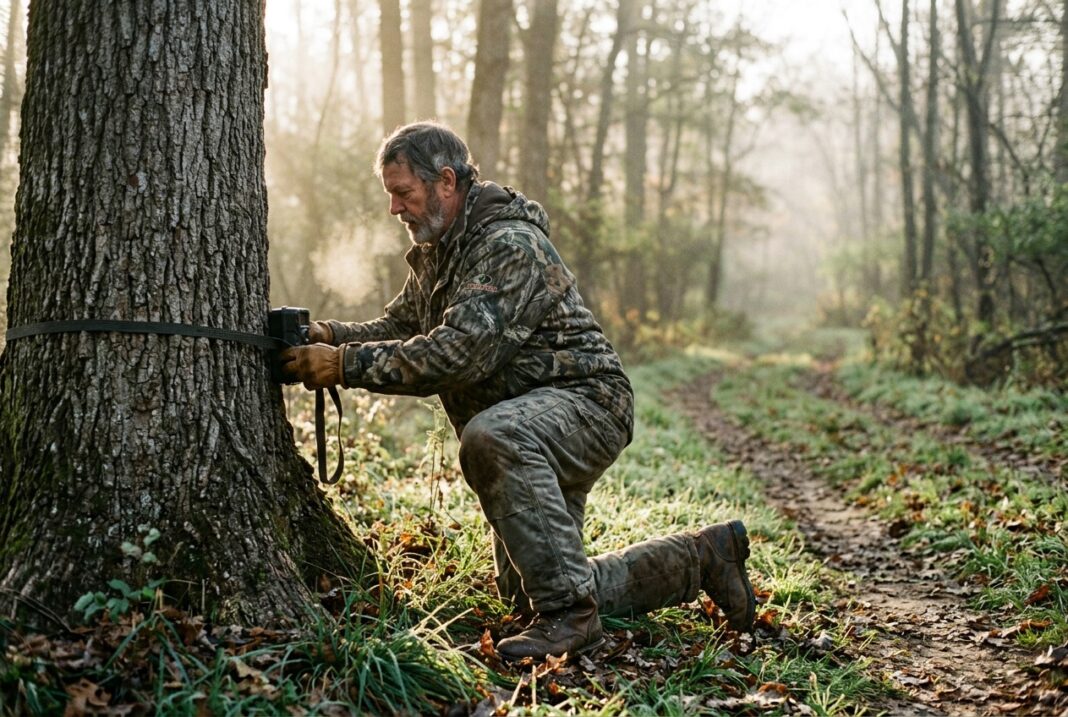
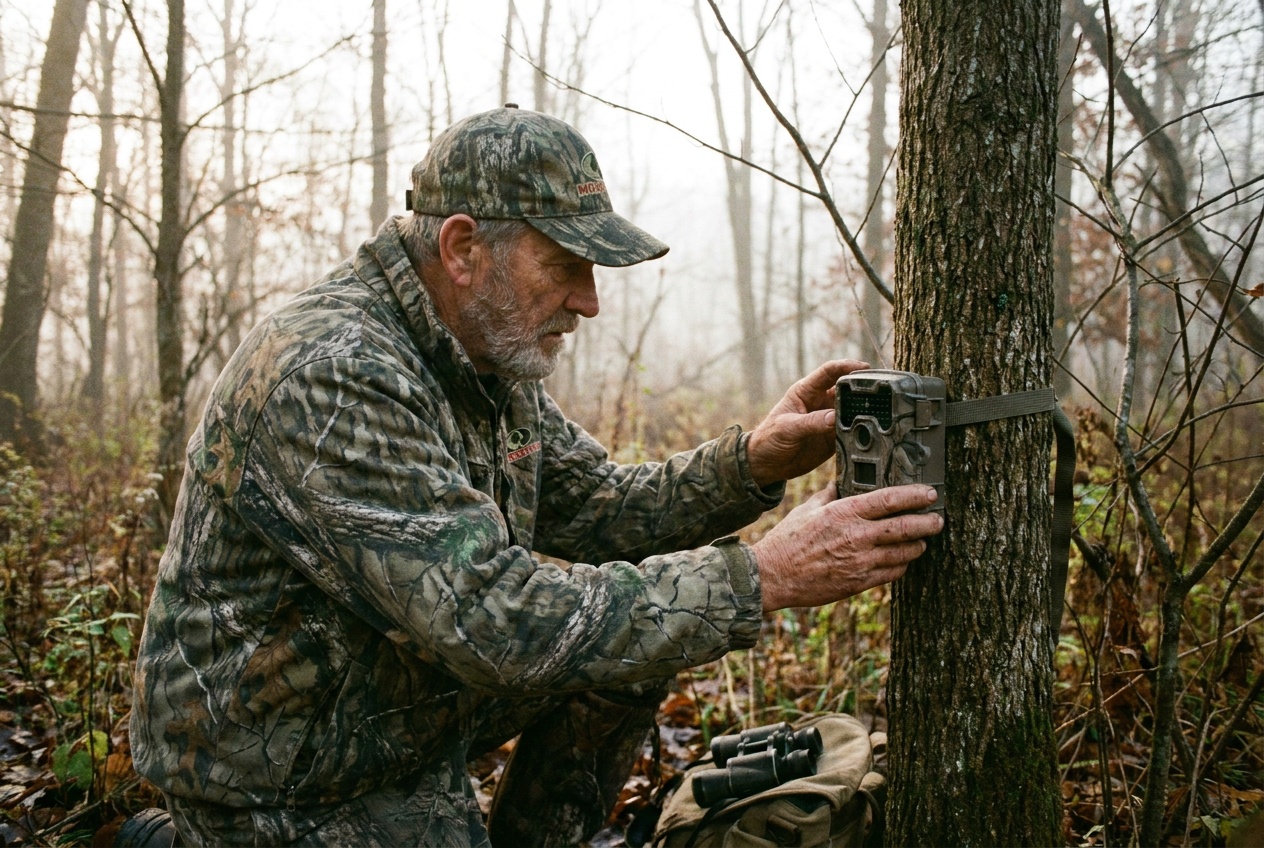
You can own the best camera on the market and still get nothing if you hang it wrong. Height, angle, and sun direction all affect what you capture. Mount your camera about waist to chest height, angled slightly downward, facing north or south when possible so you’re not fighting sunrise or sunset glare washing out your photos. Clear the brush directly in front of the lens — nothing kills a season of data faster than a branch swaying in the wind triggering five hundred false photos of nothing.
On public land, placement comes with legal responsibilities too. Many states now regulate trail camera use, including rules around cellular cameras and camera density on public ground. Before you hang cameras on state or national forest land, check your local U.S. Forest Service district regulations and your state wildl