Forty-seven seasons in, and I still get hunters asking me some version of the same question: “Public land — can I really just go hunt it?” The short answer is yes. The longer answer is what separates the guys who fill tags on public ground from the guys who spend a weekend getting frustrated and going home early. Let’s get into it properly.
What Counts as “Public Hunting Land”?
Public hunting land isn’t one single thing — it’s a patchwork of different ownership types, each with its own rules. Understanding which kind of ground you’re standing on matters, because the regulations change depending on who manages it.
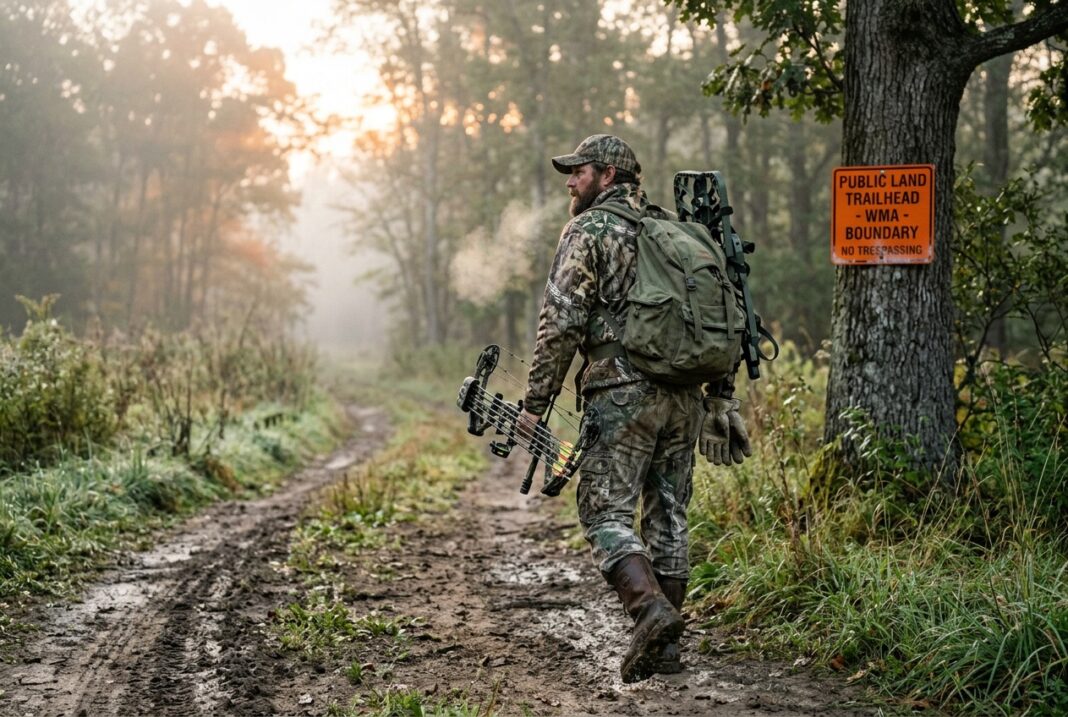
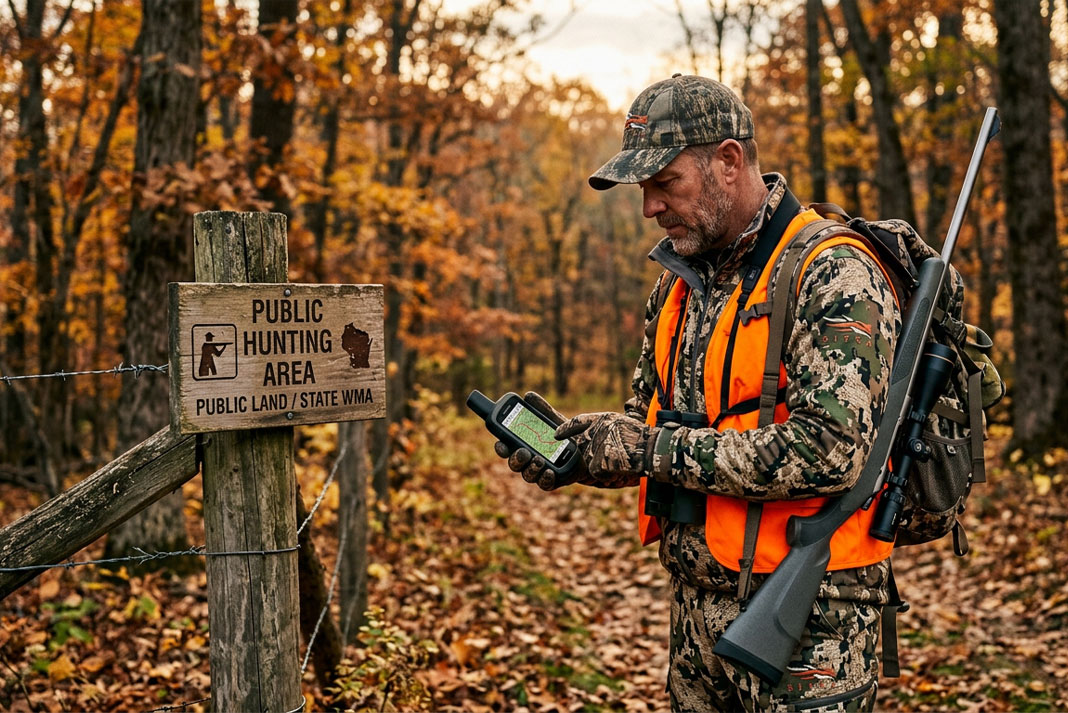
State Wildlife Management Areas (WMAs). These are parcels purchased or managed specifically for wildlife habitat and public hunting access, usually funded through hunting license dollars and excise taxes on gear (the Pittman-Robertson Act, if you want to know where your money actually goes). Every state runs these differently — some require a separate WMA permit stamp, some don’t.
National Forests. Managed by the U.S. Forest Service, national forest land is generally open to hunting under state regulations, with some local restrictions layered on top (road closures during certain seasons, designated non-motorized zones, etc.). This is some of the least-pressured ground in the country if you’re willing to get off the main roads.
BLM Land. Out west, the Bureau of Land Management oversees millions of acres open to hunting. Back east, BLM ground is rare to nonexistent, so if you’re hunting the Midwest whitetail belt like I do, this one usually won’t apply to you.
National Wildlife Refuges. Some, not all, refuges under the U.S. Fish & Wildlife Service allow hunting, often with tighter restrictions than surrounding public ground — think designated hunt zones, special permits, or limited-entry draws. Always check the refuge’s individual hunt plan before you assume anything.
Walk-In / Public Access Programs. This is the one a lot of newer hunters don’t know exists. States like Iowa, Kansas, and South Dakota pay private landowners to open their ground to public hunting for a set season. Iowa calls it the Iowa Habitat and Access Program; other states have their own names for the same idea. It’s private land, temporarily public, and it can hold some of the best whitetail sign around because it doesn’t get the same foot traffic as a well-known WMA.
How Do You Actually Find and Access Public Hunting Land?
This is where things have changed enormously since I started hunting public ground in the ’80s, when the “app” was a paper plat book and a good relationship with the county courthouse clerk.
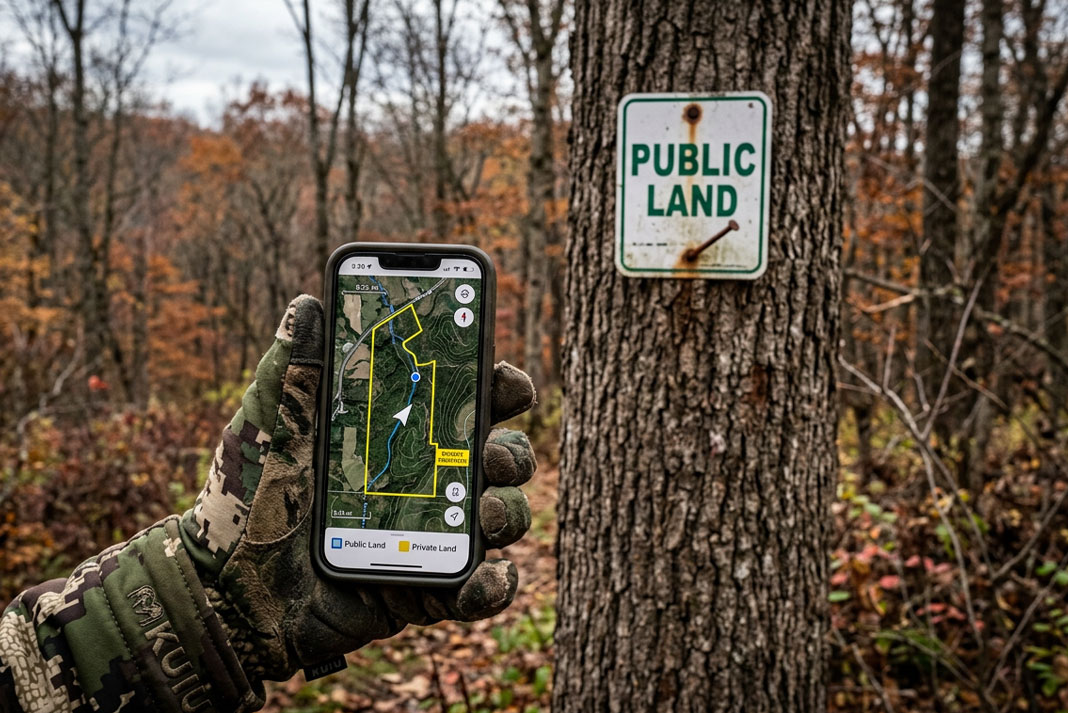
Today, mapping apps like onX Hunt have basically replaced the plat book. They overlay public/private boundary lines directly onto satellite and topo imagery, which means you can scout terrain from your couch and know with certainty where the property line sits before you ever cut a track. I still walk boundaries in person before season, because an app is only as accurate as the data behind it — but it’s an enormous head start.
Beyond mapping, most access requires:
- A valid hunting license for the state you’re hunting, purchased through that state’s Department of Natural Resources (or equivalent agency).
- Any required stamps or permits specific to the land type — WMA stamps, refuge permits, or a walk-in program registration.
- Species-specific tags, which may be over-the-counter or part of a limited draw depending on the state and the pressure that unit sees.
Some heavily hunted public units run a draw system for the best hunts — you apply, you don’t automatically get in, and preference points can matter as much as luck. If you’re serious about a specific unit, check that state’s draw deadlines a full year out. I’ve watched hunters miss an application window by a week and lose an entire season’s opportunity over it.
The Etiquette Nobody Puts on the Sign-In Sheet
Here’s the part of this conversation I care about more than the legal mechanics, because it’s the part that determines whether public land stays good hunting ground.
Public land holds pressure differently than a private lease. Every truck in the parking area is a signal to the deer, and every hunter who blows out a bedding area on opening morning affects everyone who hunts behind him that week. A few things I hold to, and that I’d ask you to hold to as well:
- Don’t set up on top of someone else’s sign-in. If a truck’s already parked at an access point, that access point is spoken for. Go find your own ground.
- Pack out more than you pack in. Public land access depends on public goodwill, especially on walk-in programs where a private landowner is choosing to let you on his dirt.
- Scout in the offseason, not the week before opener. You’ll learn more, disturb less, and you won’t be the guy other hunters are cussing under their breath.
I’ll tell you where I learned that last one the hard way. Early on — maybe my third or fourth season hunting public ground in southern Iowa — I walked straight into what I was sure was an empty river-bottom timber block two days before opener, boots crunching through dry leaves at eleven in the morning like I owned the place. I bumped a mature buck out of a bedding thicket I hadn’t even known was there, watched him trot off stiff-legged and irritated, and I never saw hide nor hair of him again that whole season. That’s a lesson you only need to learn once. Public ground rewards patience and punishes carelessness in about equal measure.
Is Public Land Actually Worth Hunting?
I’ll answer that plainly: yes, and I say that as someone who’s chased mature bucks across leased private ground in three states. Public land takes more scouting, more humility, and more willingness to walk further than the next guy. But the birds — or in our case, the deer — don’t know the difference between a fence line that says “private” and one that says “state managed.” A well-scouted public parcel that other hunters have written off as “too pressured” can hold a genuinely mature deer, especially if you’re willing to get five hundred yards past where everyone else stops.
For a deeper look at how habitat quality affects deer movement on any ground, public or private, the National Deer Association publishes some of the best research available to hunters — worth bookmarking alongside your state DNR’s regulations page.
Public hunting land isn’t a consolation prize. Learn how it actually works, treat it with the same respect you’d want shown to your own back forty, and it’ll hold up its end of the bargain.
— Emmett Hollis