Trail Camera Setup Tips for Summer Scouting 2026
I pulled a card two weeks ago off a camera I’d hung on a fence line bordering a soybean field, and out of maybe four hundred pictures, half were grass blowing in the wind. That’s a trail camera setup problem, not a bad-luck problem. Summer scouting season is here, bucks are still in bachelor groups and hitting beans hard in the evenings, and this is exactly the window where sloppy camera placement wastes weeks of data. I’ve been running eight to ten cameras a season for years now, and the setup mistakes I see repeated most are fixable in about ten minutes per camera.
What’s the best height and angle for a trail camera in summer?
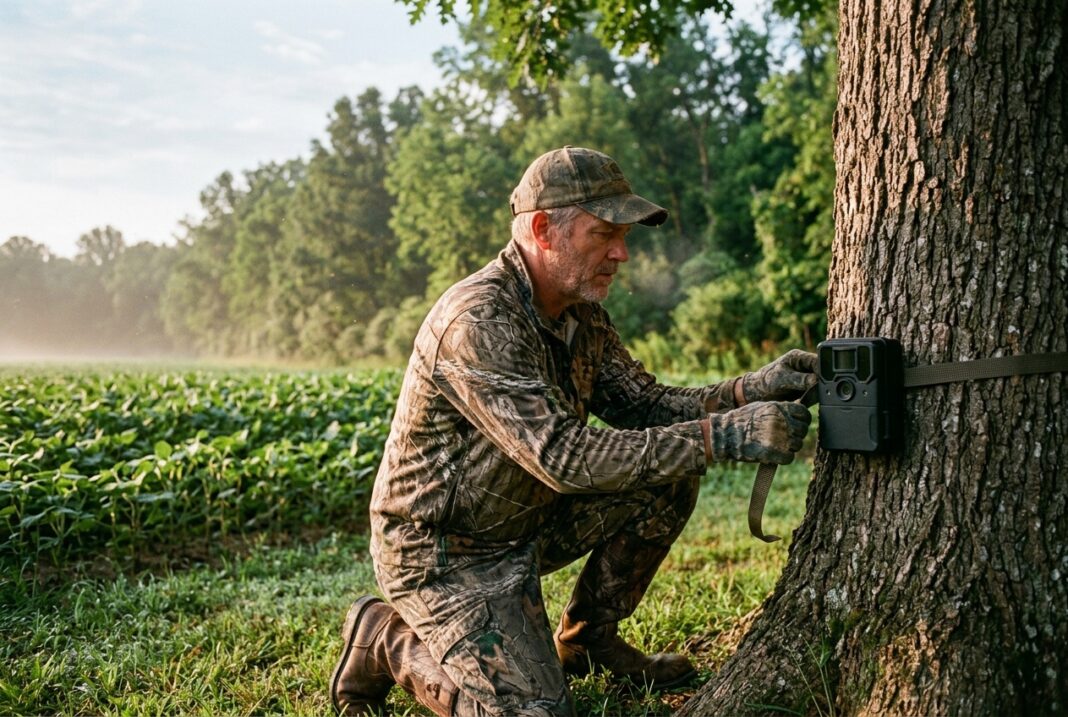
Mount the camera about waist to chest height, roughly three feet off the ground, angled slightly downward and facing north or south to avoid sun glare at dawn and dusk. That single adjustment cuts false triggers from sun flare by more than half in my experience. Facing a camera east or west during summer is the single most common mistake I still see on other guys’ setups.
Height matters more in summer than in November because deer aren’t moving through thick cover yet — they’re standing in open beans or clover for long stretches, broadside, at a predictable distance. That means you don’t need to guess trail width or funnel pinch points the way you do come the rut. Pick your field edge, back the camera off the trail by ten to fifteen feet, and let the wider field of view do the work.
Do I need a cellular trail camera for summer scouting?
No, but it saves you trips that spook deer off a food source during the exact window you’re trying to pattern them. I ran a $150 non-cellular unit next to a $400 cellular camera on the same fence line all last July, and the cheaper camera’s photo quality and trigger speed were nearly identical. The cellular unit’s only real advantage was not walking in there every eight days.
That walk-in cost is real. Human scent and noise on a food plot in summer pushes mature bucks to shift to a neighboring field faster than most hunters realize, and I’ve watched it happen on my own ground. If you’re scouting a property you can access without crossing the field or bedding area, a standard SD-card camera is the better value. If you can’t get in and out clean, pay for cellular. The National Deer Association has written plenty on minimizing intrusion pressure during summer patterning, and it lines up with what I’ve seen firsthand — less foot traffic, better data.
What batteries and settings actually last through summer heat?
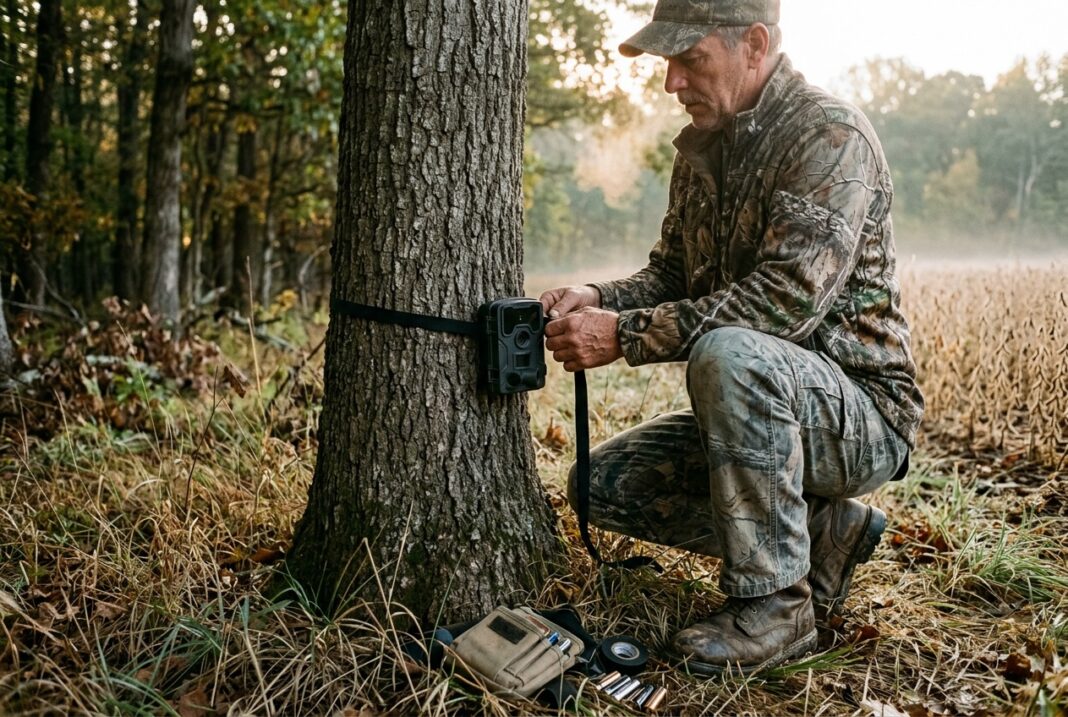
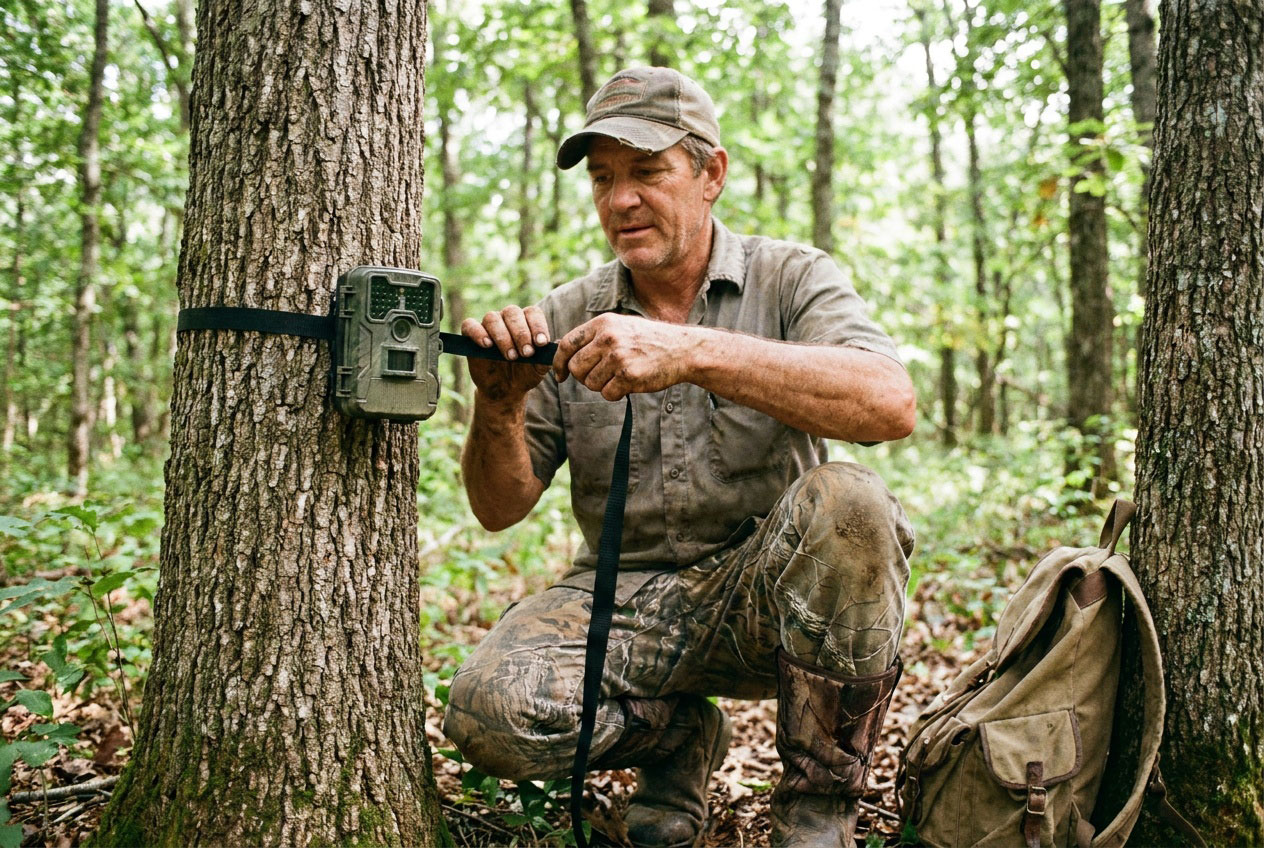
Lithium batteries are worth the extra cost every single time in summer heat — they hold voltage far longer than alkaline in temperatures pushing past 90 degrees, and I’ve had alkaline sets die in under a month on a high-traffic bean field. Set your camera to a 3-photo burst with a 30-second delay for summer; anything faster fills your card with grass and heat shimmer.
- Run lithium batteries, not alkaline — alkaline drains fast in heat and drops trigger speed noticeably
- Use a 30-second minimum delay between triggers to avoid filling the card with repeat shots of the same doe standing still
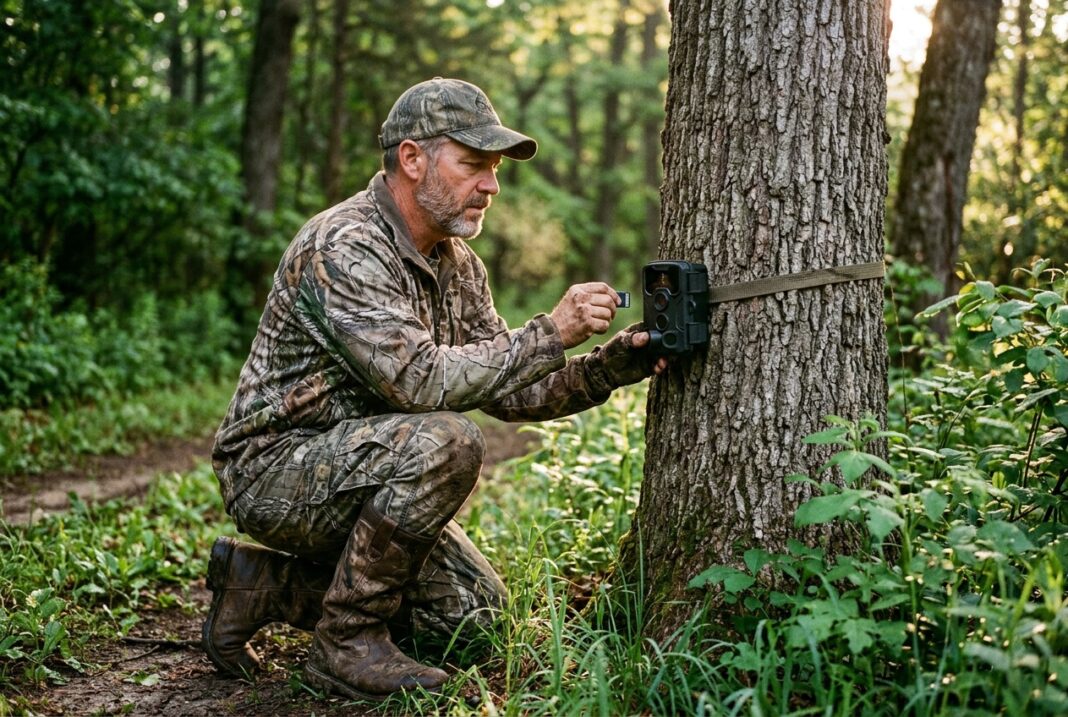
- Format your SD card fresh each time you pull it, don’t just delete photos — corrupted cards are the number one reason hunters lose a month of data
- Clear a shooting lane by hand rather than trusting the camera to ignore tall grass — I learned this one the hard way after losing three weeks of a bean field to swaying weeds
How often should I check trail cameras in summer without spooking deer?
Check field-edge cameras no more than every ten to fourteen days in summer, and always in the middle of the day when deer are bedded down. Morning and evening checks are the two mistakes that undo weeks of patient scouting in about five minutes.
I still catch myself wanting to check a card the day after I hang it, and I have to talk myself out of it. Patience with the camera schedule matters as much as patience on stand. A midday check with the truck parked well off the field, in and out in under ten minutes, keeps your data clean and your deer undisturbed. The National Wild Turkey Federation land management resources cover similar disturbance principles for food plots, and the logic carries straight over to summer deer patterning.
Final Word
- Mount cameras north or south facing, three feet high, angled down slightly
- Skip cellular unless you genuinely can’t access the field without spooking deer
- Run lithium batteries and a 30-second delay through the hottest months
- Check cards midday, no more than once every ten to fourteen days
Go pull your cards this week if you haven’t in a month, but do it at noon, not at first light. That one change alone will clean up your summer data more than any camera upgrade will.